









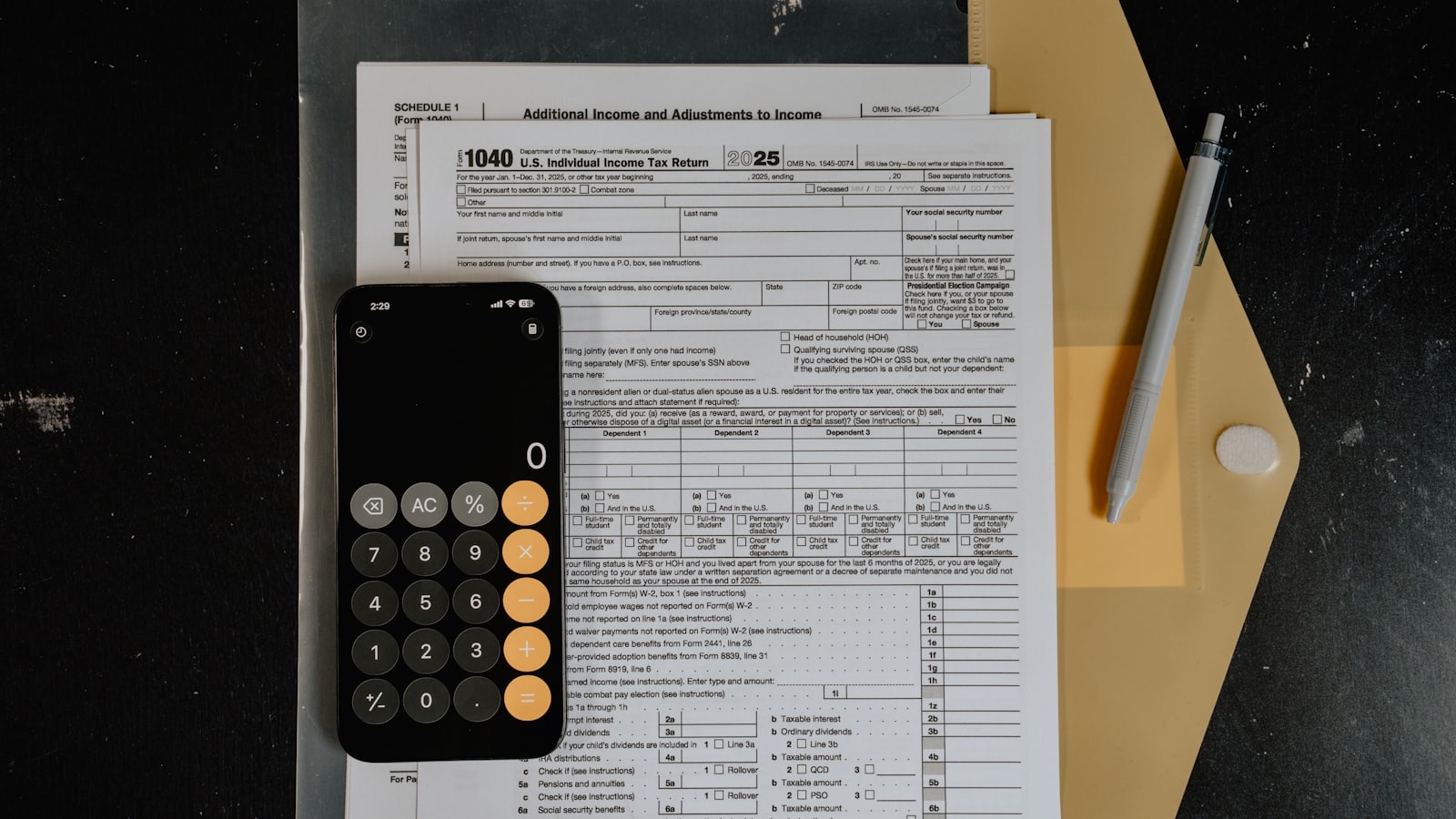






The Foreign Earned Income Exclusion (FEIE) is the reason so many Americans can build a life abroad without a punishing US tax bill on top of their local one. For the 2025 tax year it lets a qualifying taxpayer exclude roughly $130,000 of foreign earned income from US taxation — and because the exclusion is per person, a couple who both work overseas and both qualify can shelter a combined amount above $250,000. Layer in the foreign housing exclusion for expensive cities and the shield gets wider still. Claimed on Form 2555, the FEIE is the workhorse of expat tax planning.
But the exclusion is not automatic and it is not universal. You have to qualify by passing one of two tests, you have to claim it on a timely filed return, and it covers only earned income — your salary and self-employment fees, never your dividends, capital gains, or rental income. Getting the mechanics right is the difference between a clean zero-tax year and a surprise balance due. This guide walks through the ceiling, the two residency tests, what counts as foreign earned income, and the housing exclusion that quietly adds thousands to your shelter.
What the exclusion is — and what it isn't
The FEIE removes a defined amount of foreign earned income from your US taxable income. It does not reduce your tax rate, and it does not touch income that isn't earned. That distinction is where filers go wrong. Earned income is compensation for personal services you perform: wages, salary, bonuses, commissions, professional fees, and the labor portion of self-employment income. It is sourced to where you do the work, not where you're paid or where the client sits.
Everything else is unearned. Dividends, interest, capital gains, rental income, pension and annuity payments, and Social Security are all outside the FEIE. If those make up a meaningful part of your income, the exclusion alone won't cover you — you'll pair it with the foreign tax credit to address the passive side.
| Income type | Foreign earned income? | FEIE eligible? |
|---|---|---|
| Salary and wages for work performed abroad | Yes | Yes |
| Self-employment / freelance fees for services abroad | Yes | Yes (net of expenses) |
| Bonuses and commissions earned abroad | Yes | Yes |
| Dividends and interest | No | No |
| Capital gains on investments | No | No |
| Rental income from foreign property | No | No |
| Pension and Social Security | No | No |
One more limit worth naming: the FEIE excludes income tax but not self-employment tax. A freelancer abroad can exclude their earnings from income tax under the FEIE and still owe the 15.3% self-employment tax unless a totalization agreement between the US and their country of residence relieves it.
Test one — the physical presence test
The physical presence test is the more mechanical of the two qualifying paths, and the one most useful to digital nomads and short-term assignees. You qualify if you are physically present in foreign countries for at least 330 full days during any 12-month period. The 12-month window does not have to match the calendar year — you choose the period that maximizes your qualifying days, which lets you straddle two tax years.
The rules are strict about what counts. A "full day" is a 24-hour period from midnight to midnight spent in a foreign country. Days spent in the US, over US airspace, or in international waters do not count. Travel days that cross into US airspace are lost. Because the count is unforgiving, careful travel logging is essential — a couple of miscounted trips home can drop you below 330 and disqualify the whole year.
- Count only full midnight-to-midnight days spent inside a foreign country
- Exclude US days, US airspace, and international waters — even brief layovers
- Pick the 12-month window that captures your best 330 days, not just the calendar year
- Keep a contemporaneous travel log with dates and countries
- Remember that a 'tax home' abroad is still required — presence alone isn't enough
Test two — the bona fide residence test
The bona fide residence test is qualitative rather than a day-count. You qualify if you are a bona fide resident of a foreign country for an uninterrupted period that includes an entire tax year — meaning at least one full January-through-December stretch of genuine residence. Once you've established bona fide residence, you can take trips back to the US without automatically losing it, which makes this test more forgiving than the physical presence test for long-term expats with real roots abroad.
"Bona fide" means the IRS looks at the substance of your life abroad: whether you've set up a home, whether your stay is indefinite rather than for a defined short assignment, whether you pay local taxes as a resident, and whether your family and social ties have moved with you. A one-year contract with a fixed end date and a return ticket home generally won't qualify; an open-ended relocation with a local lease, local tax residency, and no set return date generally will.
Bona fide residence test
- Requires an uninterrupted period covering a full calendar year
- Judged on the nature and permanence of your ties abroad
- Allows US trips without losing qualification once established
- Best for long-term, indefinite relocations
- Green-card holders generally cannot use it unless a treaty applies
Physical presence test
- Requires 330 full days in any 12-month period
- Pure day-count — intent and ties don't matter
- Any US day counts against you
- Best for nomads, contractors, and first partial years
- Available to citizens and resident aliens alike
You don't have to pick one test for good. Many expats qualify under the physical presence test in their first partial year abroad, then switch to the bona fide residence test once they've completed a full calendar year of genuine residence — gaining the freedom to visit the US without jeopardizing the exclusion. Choose the test that fits the year in front of you.
The foreign housing exclusion — the add-on most people miss
On top of the income exclusion, Form 2555 lets qualifying taxpayers exclude or deduct part of their foreign housing costs — rent, utilities (other than telephone), and certain related expenses. The housing benefit only applies to amounts above a base floor (roughly 16% of the FEIE) and is capped at a percentage of the exclusion. That cap is higher for designated high-cost cities — places like Hong Kong, London, Singapore, Geneva, and Tokyo — where the IRS publishes elevated limits each year.
The housing exclusion is calculated after and on top of the income exclusion — it shelters housing costs that would otherwise be taxable even beyond the ~$130,000 income cap. Employees claim a housing exclusion; the self-employed claim a housing deduction instead. Both are figured on Form 2555, and both require you to first qualify under the bona fide residence or physical presence test. For an expat in an expensive city, the housing benefit can add well over ten thousand dollars of additional shelter.
Claiming it right — and the traps to avoid
The FEIE is claimed by attaching Form 2555 to a timely filed Form 1040. Miss the return and you generally forfeit the exclusion — the benefit is not applied automatically, and a late or unfiled return can cost you the shelter entirely absent relief. There are also strategic traps: the exclusion uses a "stacking" rule that taxes your non-excluded income at the rates that would apply as if the excluded income were still on top, so high earners don't escape the brackets. And once you revoke the FEIE, you generally can't re-elect it for five years without IRS consent.
The Foreign Earned Income Exclusion is the most powerful tool most expats have: it shelters roughly $130,000 of foreign earned income per person for 2025, and the housing exclusion adds more on top in high-cost cities. To use it, qualify under either the 330-day physical presence test or the bona fide residence test, claim it on a timely filed Form 2555, and remember its limits — it covers earned income only, not investments, and it doesn't erase self-employment tax. Where the FEIE runs out, the foreign tax credit takes over. Coordinate the two deliberately and most Americans abroad reduce their US tax to zero without leaving benefits on the table.
Maximize your exclusion, minimize your tax
MK Tax & Accounting runs the FEIE, housing exclusion, and foreign tax credit side by side to find the combination that shelters the most income — and files Form 2555 correctly so your exclusion is never lost to a technicality.
Plan your expat returnSources
- IRS — Publication 54, Tax Guide for U.S. Citizens and Resident Aliens Abroad
- IRS — Foreign Earned Income Exclusion and Form 2555 Instructions
- IRS — Rev. Proc. 2024-40, Annual Inflation Adjustments (FEIE amount)
- IRS — Physical Presence Test and Bona Fide Residence Test
- IRS — Foreign Housing Exclusion or Deduction
Frequently asked questions
For the 2025 tax year the Foreign Earned Income Exclusion is indexed to roughly $130,000 per qualifying person. A married couple who both work abroad and both qualify can each claim their own exclusion, sheltering a combined amount well above $250,000 of foreign earned income.
The bona fide residence test requires you to be a genuine resident of a foreign country for an uninterrupted period that includes a full calendar year. The physical presence test only requires you to be physically present in foreign countries for at least 330 full days during any rolling 12-month period. Physical presence is a pure day-count; bona fide residence looks at the nature of your ties abroad.
No. The FEIE applies only to earned income — wages, salaries, professional fees, and self-employment income for services performed abroad. Dividends, interest, capital gains, rental income, and pension distributions are not earned income and cannot be excluded. Use the foreign tax credit to address tax on that passive income.
On top of the income exclusion, qualifying expats can exclude or deduct a portion of employer-provided housing costs above a base amount. The housing exclusion is capped as a percentage of the FEIE, with higher caps for designated high-cost cities. It's claimed on the same Form 2555 as the income exclusion.
