









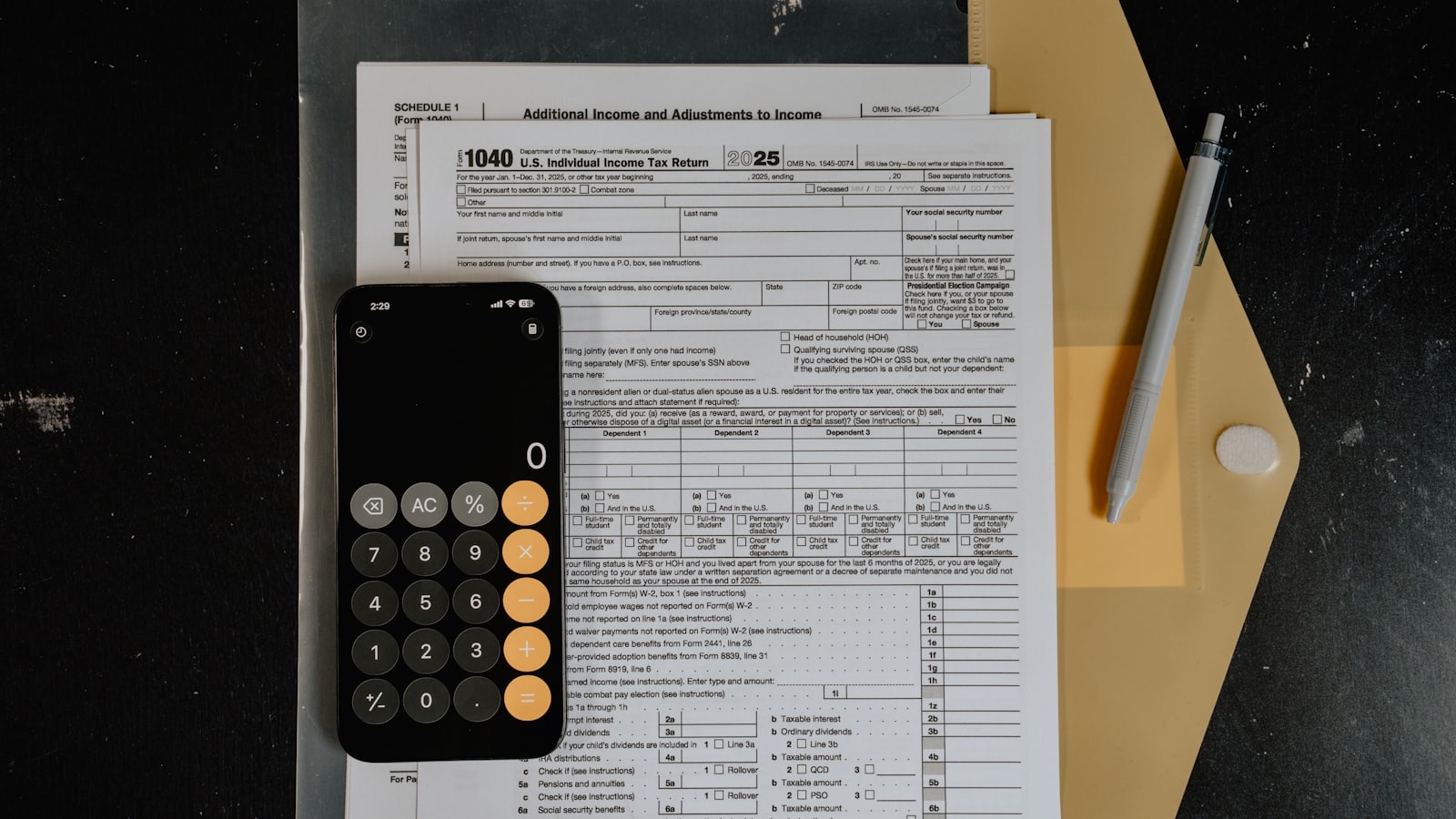






The home office deduction has a reputation as an audit magnet that keeps many eligible taxpayers from claiming a legitimate, valuable deduction. The truth is more reassuring: it's entirely legitimate when you meet the rules, and claiming it correctly is not risky. The two things that matter are passing the exclusive-use test and choosing the better method. Get those right and the deduction is fully defensible — the simplified method alone is worth up to $1,500 a year with almost no paperwork.
Two rules decide everything. First, the space has to be used exclusively and regularly for business — the single point where most claims fall apart. Second, you pick between two calculation methods: the simplified method at $5 per square foot up to 300 square feet, or the regular method that deducts the business-use percentage of your actual home costs on Form 8829. For a larger office or a higher-cost home, the regular method often beats the $1,500 cap by a wide margin. This article walks through who qualifies, how the two methods compare, and the mistakes that turn a legitimate deduction into an examination headache.
Who Qualifies
The deduction is available to self-employed individuals, sole proprietors, partners, and pass-through owners who use part of their home for business. Since the 2017 tax law, employees who work from home generally cannot claim it. The space must meet two tests: exclusive use (used regularly and only for business — no personal use) and principal place of business.
This is where most claims fail. A room used as an office by day and a guest room on weekends does not qualify. A desk in the corner of a living room the family also uses does not qualify. The space — even a portion of a room — must be used solely for business and nothing else.
The Two Methods
| Feature | Simplified | Regular |
|---|---|---|
| Calculation | $5 per sq ft | Actual expenses × business-use % |
| Maximum | 300 sq ft ($1,500 cap) | No square-footage cap |
| Recordkeeping | Minimal | Detailed records required |
| Depreciation | None | Home depreciation included |
| Recapture at sale | None | Applies to depreciation taken |
| Form | Schedule C worksheet | Form 8829 |
The simplified method ($5/sq ft up to $1,500) suits smaller offices and taxpayers who value simplicity. The regular method deducts the business-use percentage of actual expenses — rent or mortgage interest, utilities, insurance, repairs, and depreciation — and for a larger office or higher-cost home can far exceed the $1,500 cap.
Choosing between the methods
The right method is a math question, not a matter of preference. Run both numbers before you file — the difference on a larger office is often several thousand dollars.
Measure the office and the home
Get the square footage of the exclusive-use space and the total finished square footage of the home. Divide to get your business-use percentage.
Run the simplified number
Multiply the office square footage (up to 300) by $5. A 200-square-foot office yields a $1,000 deduction with no receipts required.
Run the regular number
Total your annual home costs — rent or mortgage interest, property tax, utilities, insurance, repairs — and multiply by the business-use percentage. Add home depreciation if you own.
Compare and decide
Take the larger deduction. A high-cost home or a larger office usually favors the regular method; a small office in a modest home often favors the simplified method's zero-paperwork simplicity.
There is no permanent election. You can choose the method that produces the bigger deduction each year — simplified one year, regular the next — as long as you do not mix the two for the same home in the same year. That flexibility is worth using: re-run both numbers annually rather than defaulting to last year's choice.
The exclusive-use test in practice
Nearly every disallowed home office deduction traces back to one failure: the space was not used exclusively for business. The IRS reads "exclusive" literally — any regular personal use of the area, however minor, disqualifies it. The good news is that meeting the test is straightforward once you understand what counts and what doesn't.
Passes the exclusive-use test
- A spare bedroom converted entirely to an office
- A finished basement area used only for the business
- A partitioned corner of a room used solely for work
- A detached studio or garage workshop used only for business
- A dedicated storage area for inventory or product samples
Fails the exclusive-use test
- A guest room that doubles as an office on weekdays
- The kitchen table where the family also eats
- A den used for work and personal Netflix
- A desk in a living room the household shares
- A room where children do homework in the evenings
There are two narrow exceptions to strict exclusive use: space used regularly for storage of inventory or product samples (if the home is your only fixed business location) and space used as a licensed daycare facility. Outside those, the rule is absolute — so define the boundary of the office space clearly and keep it that way year-round.
Common Mistakes
- Failing the exclusive-use test — the most common and most consequential error
- Claiming it as a remote employee — the deduction is for the self-employed
- Overstating the business-use percentage
- Ignoring depreciation recapture under the regular method when the home is sold
- Poor documentation — no measurements, photos, or expense records
Documentation is what separates a defensible deduction from a disallowed one. None of it is difficult; it just has to exist before the IRS asks. Build the file once and update it as expenses come in.
- A simple diagram or measurement of the office square footage and the total home square footage
- Dated photos showing the space is set up for business and used exclusively for it
- Utility, insurance, and repair bills for the year (regular method)
- Rent statements or mortgage-interest and property-tax records (regular method)
- A depreciation schedule if you own and use the regular method
- Records tying the space to your business — client meetings, mail, business address on file
Home office is a federal deduction claimed on your Schedule C. Florida has no state personal income tax, so there is no separate state home office deduction to claim — but the federal benefit is identical for a Fort Lauderdale filer and a filer anywhere else. The same exclusive-use and method rules apply nationwide.
The deduction is legitimate and worth claiming when you genuinely qualify. The two decisions that matter: pass the exclusive-use test honestly, and choose the method that maximizes the benefit — simplified for smaller offices and simplicity, regular for larger offices or higher-cost homes. Document the space and expenses, and the deduction is fully defensible.
Claim your home office the right way
MK Tax & Accounting measures your space, runs the simplified versus regular numbers, and files the method that maximizes your deduction — with documentation that holds up if the IRS ever asks.
Talk to a tax proSources
- IRS — Publication 587, Business Use of Your Home (IRS.gov)
- IRS — Simplified Option for Home Office Deduction (IRS.gov)
- IRS — About Form 8829, Expenses for Business Use of Your Home (IRS.gov)
- IRS — Publication 946, How to Depreciate Property (depreciation and recapture)
- Internal Revenue Code Section 280A, Disallowance of certain expenses in connection with business use of home
- Internal Revenue Code Section 121, Exclusion of gain from sale of principal residence
Frequently asked questions
Yes. The deduction is available to renters and owners alike. Under the regular method, renters apply the business-use percentage to rent and other home expenses — and have no depreciation, which also means no recapture concern.
Unlikely. The exclusive-use rule means no personal or family use of the space. A kitchen table or a guest room both fail the test. A permanent desk in a dedicated corner used solely for business may qualify for that portion — document it carefully.
If you used the regular method and claimed depreciation, depreciation recapture applies at sale (taxed as ordinary income, up to 25%). The simplified method avoids this. The Section 121 principal-residence gain exclusion still applies to the non-office portion.
Yes. You choose a method each tax year and can change it annually — the choice is not locked in. You cannot use both methods for the same home in the same year, and any depreciation already claimed under the regular method still carries a recapture consequence at sale, but the year-to-year choice itself is flexible.


