









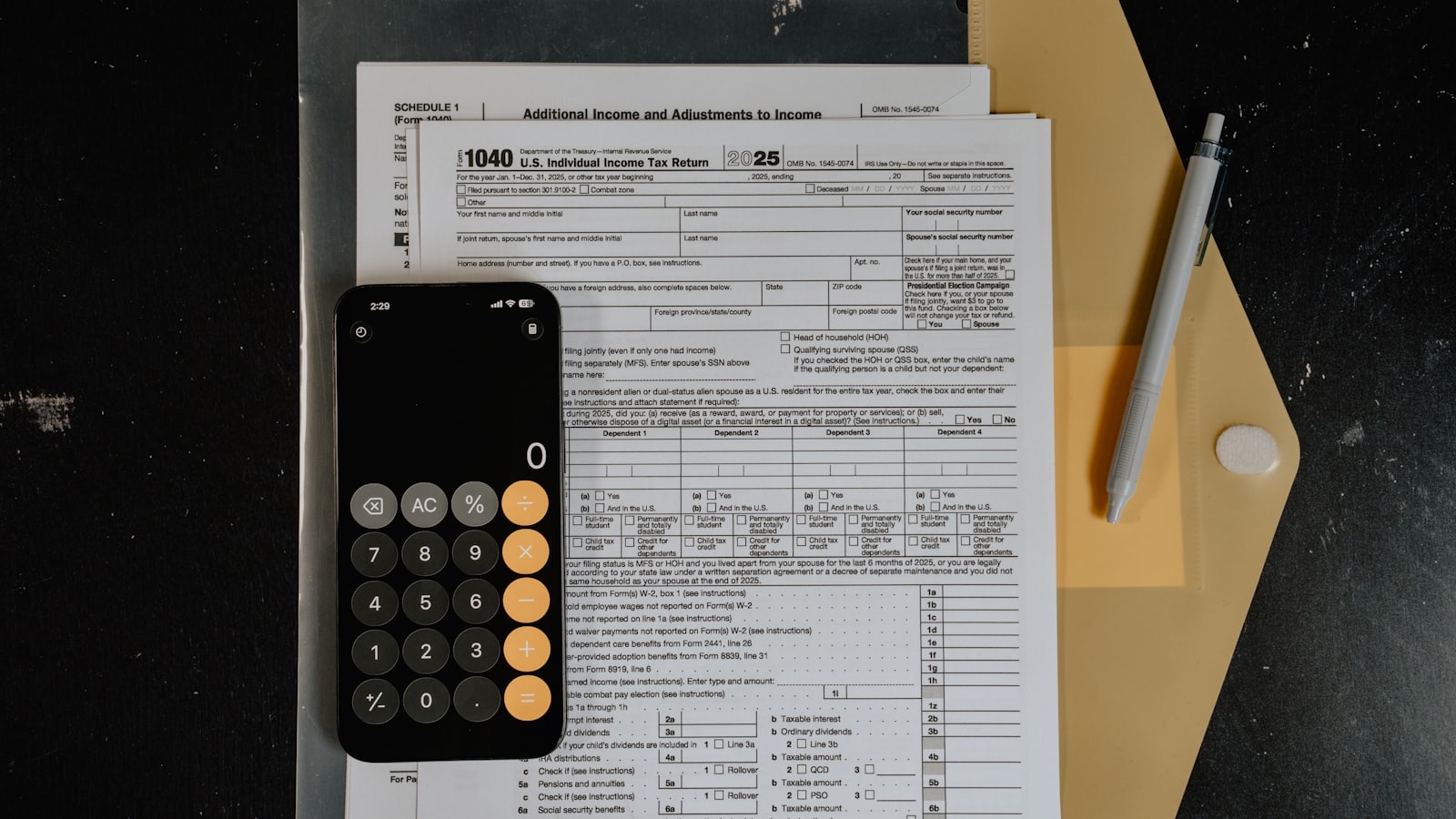







The U.S. tax system is pay-as-you-go. Employees satisfy this through withholding. The self-employed, business owners, and anyone with substantial income not subject to withholding must satisfy it through quarterly estimated payments. Get them right and April is uneventful; get them wrong and you face underpayment penalties, interest, and a cash-flow shock.
The trigger is low: you generally owe estimates once you expect to owe $1,000 or more after withholding and credits. And the penalty is not a flat fee — it's interest on each period's shortfall, assessed quarter by quarter at a rate the IRS resets every three months. Because the underpayment rate has run around 8% annualized in recent years, a missed installment compounds quietly until it's paid. For a Florida owner with no state estimate to coordinate, the federal schedule is the whole obligation — which makes getting it right both simpler and entirely on you.
Who Must Pay
Generally, you must make estimated payments if you expect to owe at least $1,000 after withholding and credits, and your withholding will be less than the smaller of 90% of this year's tax or 100% of last year's (110% if prior-year AGI exceeded $150,000). This sweeps in sole proprietors, partners, S-corp shareholders, freelancers, investors, and landlords. In practice, the moment a meaningful slice of your income arrives without tax already withheld — a K-1 distribution, 1099 contract revenue, rental profit, or a large capital gain — you're in the estimated-tax system whether or not you file a business return. Florida residents feel this acutely: with no state withholding to lean on, the federal estimates are the only prepayment mechanism in play.
The Safe Harbor Rules
| Safe Harbor | Requirement |
|---|---|
| 90% of current year | Pay at least 90% of what you'll owe this year |
| 100% of prior year | Pay 100% of last year's tax (AGI ≤ $150,000) |
| 110% of prior year | Pay 110% of last year's tax (AGI > $150,000) |
Meet a safe harbor and the underpayment penalty is avoided entirely — regardless of how large your eventual balance is. Pay 100% (or 110%) of last year's tax in four equal installments and you're protected even if your income rises sharply. You'll still owe the balance in April, but no penalty.
The Payment Schedule
| Payment | Income Period | Due Date |
|---|---|---|
| Q1 | Jan 1 – Mar 31 | April 15 |
| Q2 | Apr 1 – May 31 | June 15 |
| Q3 | Jun 1 – Aug 31 | September 15 |
| Q4 | Sep 1 – Dec 31 | January 15 (following year) |
Note the uneven periods — Q2 covers two months and Q4 covers four. Treating them as equal three-month quarters can cause an underpayment in an early period even if the annual total is correct. The due dates also shift to the next business day when the 15th falls on a weekend or holiday, so confirm the exact date each quarter rather than relying on memory. And because the penalty is computed period by period, a payment that arrives even a few days late for a given quarter starts the interest clock for that quarter specifically — timeliness matters as much as the amount.
How to Calculate
- Safe-harbor method (simplest): prior-year tax × 100% (or 110%) ÷ 4 — guarantees no penalty regardless of current-year income
- Current-year projection: estimate this year's tax and pay 90% across the installments — avoids overpaying but requires accurate forecasting
- Annualized income method (Form 2210, Schedule AI): pay based on income actually earned each period — best for seasonal or lumpy income
Estimated payments must cover not just income tax but also self-employment tax — 15.3% on net earnings up to the wage base, plus 2.9% Medicare above it. Owners who budget only for income tax routinely come up short.
A Worked Example
Numbers make the mechanics concrete. Suppose a Fort Lauderdale consultant paid $28,000 in total federal tax last year, with prior-year AGI under $150,000. The prior-year safe harbor is the simplest shield: 100% of last year's tax, split into four equal installments, immunizes the whole year against the underpayment penalty no matter how much this year's income grows.
| Installment | Due date | Safe-harbor payment |
|---|---|---|
| Q1 | April 15 | $7,000 |
| Q2 | June 15 | $7,000 |
| Q3 | September 15 | $7,000 |
| Q4 | January 15 (next year) | $7,000 |
Four payments of $7,000 total $28,000 — exactly last year's tax — and no penalty can attach even if the consultant earns twice as much this year. The catch is cash flow: if income really does jump, the balance is still due in April, just without a penalty on top. That's the trade the safe harbor makes — certainty about the penalty in exchange for a larger April true-up. An owner who wants to avoid both the penalty and the April surprise pays the safe-harbor amount on schedule and sets aside additional tax on the extra income as it comes in.
The prior-year safe harbor protects you from the penalty; it does not tell you your real tax bill. Treat it as a floor, not a forecast. In a strong year, layer a rough current-year projection on top so the cash is already reserved when the April balance lands.
Which Method Fits Your Income
The right calculation method depends on how steady your income is. Owners with predictable revenue can set it and forget it on the safe harbor; owners with lumpy, seasonal, or fast-growing income are better served by matching payments to income as it's actually earned. The two approaches trade certainty against cash-flow precision.
Prior-year safe harbor — steady income
- Pay 100% (or 110% over $150,000 AGI) of last year's tax in four equal parts
- Immune to the penalty no matter how much income rises
- Requires no forecasting once the number is set
- Downside: may overpay in a down year and float the IRS money
- Best for stable salaries, recurring contracts, mature businesses
Annualized income method — lumpy income
- Pay based on income actually earned in each period, via Form 2210 Schedule AI
- Avoids prepaying tax on income you haven't earned yet
- Matches a big Q3 or Q4 spike to the quarter it lands in
- Downside: more recordkeeping and a more complex filing
- Best for seasonal, commission, or rapidly growing businesses
There is a third lever employees-with-a-side-business often miss: withholding is treated as paid evenly across the year, even if it's withheld in December. If you or a spouse also earn W-2 wages, bumping up withholding late in the year via a new Form W-4 can retroactively cure an earlier-quarter estimate shortfall that a Q4 estimated payment cannot.
Your Quarterly Routine
Estimated taxes go wrong when they're an afterthought four times a year. Build a short recurring routine and each due date becomes a five-minute confirmation instead of a scramble.
- Tally income received since the last payment, separating business profit from other income
- Set aside tax as you earn — a dedicated 25–30% holdback account prevents the quarter-end cash crunch
- Recompute the installment: safe-harbor quarter, or annualized if income has swung
- Include self-employment tax, not just income tax, in the figure
- Pay via IRS Direct Pay or EFTPS and save the confirmation number
- Log the payment date and amount so year-end reconciliation is clean
Quarterly estimates reward routine over cleverness. Pick a method that matches your income — prior-year safe harbor if it's steady, annualized if it's lumpy — hold back 25–30% of profit as it lands, cover self-employment tax alongside income tax, and pay on the real (uneven) schedule through Direct Pay or EFTPS. Do that and the penalty never appears, April holds no surprise, and the only balance left is the one you already planned for.
Stop guessing at your quarterly payments
MK Tax & Accounting calculates your safe-harbor number, chooses the right method for your income pattern, and builds a payment calendar so you never miss a quarter — or overpay the IRS by a dollar.
Talk to a tax proSources
- IRS — Estimated Taxes, Form 1040-ES (IRS.gov)
- IRS — Topic No. 306, Penalty for Underpayment of Estimated Tax (IRS.gov)
- IRS — Underpayment of Estimated Tax by Individuals, Form 2210 (IRS.gov)
- IRC Section 6654 — Failure by Individual to Pay Estimated Income Tax (Congress.gov)
- IRS — Pay Your Taxes: Direct Pay and EFTPS (IRS.gov)
Frequently asked questions
You may owe an underpayment penalty for that period, calculated as interest on the shortfall from the due date until paid. A larger later payment doesn't erase an earlier underpayment, because the penalty is computed quarter by quarter — pay as soon as possible to limit it.
Not without penalty. The system is pay-as-you-go and the penalty is assessed per period, so paying the full year's tax in April leaves the earlier quarters underpaid — even if the annual total is correct.
Use the prior-year safe harbor: pay 100% (or 110% if your prior-year AGI exceeded $150,000) of last year's total tax in four equal installments. This protects you from the penalty regardless of how much your income rises this year.
The fastest, free options are IRS Direct Pay from a bank account and the Electronic Federal Tax Payment System (EFTPS); you can also pay by card for a processor fee, or mail a check with a Form 1040-ES voucher. Keep the confirmation number for each payment — it's your proof of timely payment if the IRS later questions a period.


