









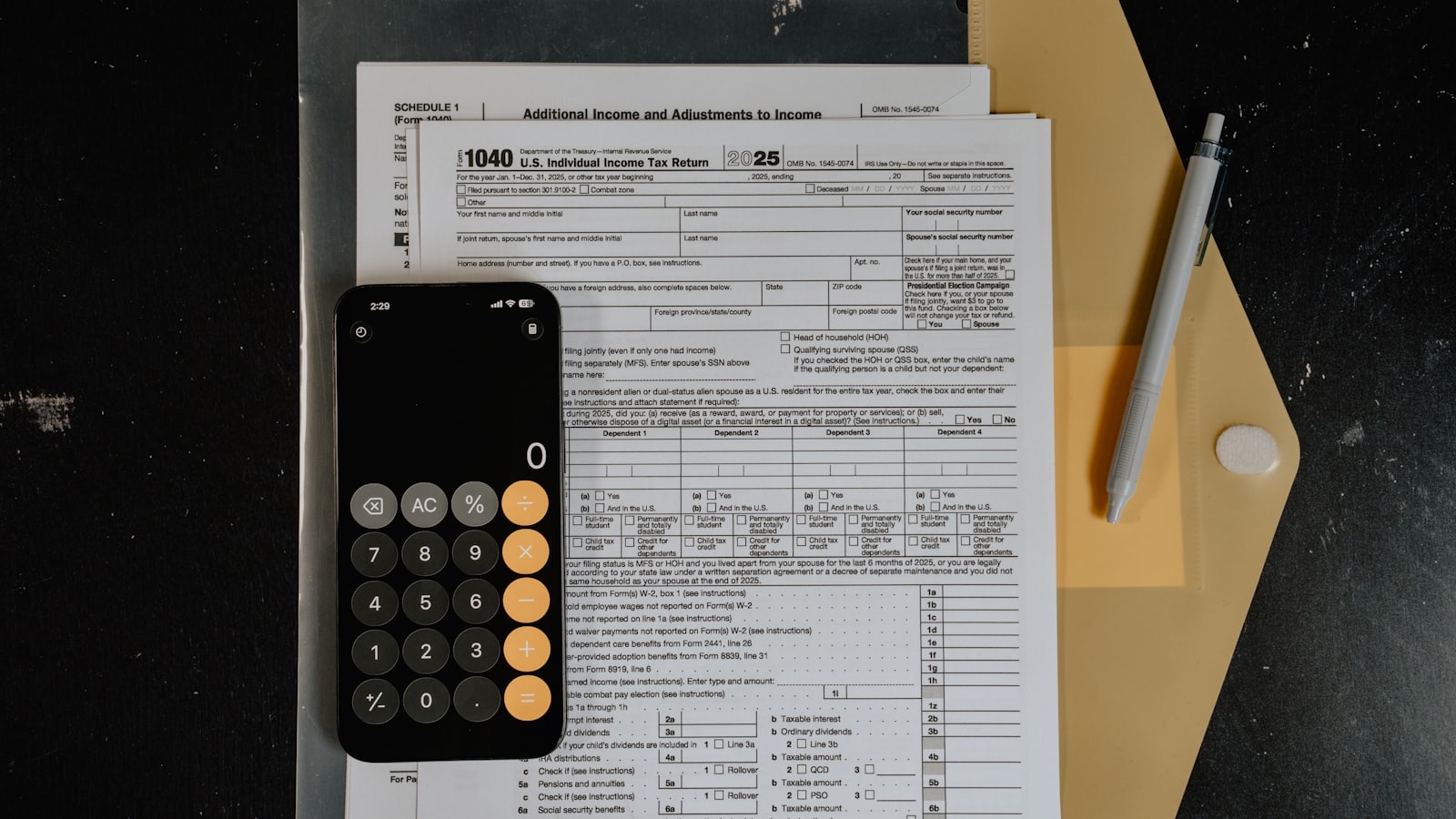






If you are a US citizen or green-card holder living overseas, the IRS still considers you a US taxpayer on your worldwide income — your salary in Lisbon, your consulting fees in Dubai, your rental income in Mexico, and your investment gains anywhere on earth. The United States is one of the only countries that taxes based on citizenship rather than residence, which means moving abroad does not end your filing obligation. You file a Form 1040 every year you meet the income threshold, and for a married-filing-jointly couple in 2025 that threshold is roughly $30,000 in gross income — low enough that almost every working expat is required to file.
The good news is that filing rarely means paying. Between the Foreign Earned Income Exclusion, the foreign tax credit, and the automatic two-month extension to June 15, most Americans abroad who file correctly owe little or no US tax. The trap is not the tax — it's the disclosure. Foreign bank accounts trigger a separate FBAR filing with the Treasury, foreign assets over certain thresholds trigger FATCA reporting on Form 8938, and the penalties for missing those forms dwarf anything on the income-tax side. Understanding what you owe, when, and to whom is the whole game.
Who has to file — and why residence doesn't matter
The filing rule for Americans abroad is the same rule that applies at home: if your gross worldwide income exceeds the standard filing threshold for your filing status, you must file Form 1040. Citizenship, not location, is what binds you. A US citizen who has lived in Singapore for twenty years and never set foot back in the country still files annually. A green-card holder working in Berlin does too, because a green card makes you a US tax resident until you formally abandon it.
The thresholds track the standard deduction and rise slightly each year. For the 2025 tax year, a single filer under 65 generally must file at about $15,000 of gross income, and a married couple filing jointly at roughly $30,000. Self-employment changes the math sharply: if you have $400 or more in net self-employment earnings — freelance, consulting, a one-person business — you must file regardless of the general threshold, because self-employment tax still applies.
| Situation | Must file a US return? |
|---|---|
| US citizen employed abroad above the income threshold | Yes — worldwide income |
| Green-card holder living abroad | Yes — resident until the card is formally abandoned |
| Self-employed abroad with $400+ net earnings | Yes — regardless of the general threshold |
| Dual citizen who has never lived in the US | Yes — if a US citizen and over the threshold |
| Income fully excluded by the FEIE, tax owed is $0 | Yes — the exclusion must be claimed on a filed return |
| Below the gross income filing threshold | Generally no — but check FBAR/FATCA separately |
The line that catches people is the fifth one: the Foreign Earned Income Exclusion does not exempt you from filing. It is a benefit you claim on a return you file. Skip the return and you skip the exclusion — which can turn a zero-tax year into a real balance due plus penalties.
The June 15 deadline and the extensions behind it
Americans abroad get a break on timing. If your main home and principal place of business are outside the United States (and Puerto Rico) on the regular April due date, you receive an automatic two-month extension to June 15 — no form, no request, it applies by operation of law. You simply attach a statement to your return noting that you qualified for the extension.
Need more time? Form 4868 extends the filing deadline to October 15, and in narrow cases a further discretionary extension to December 15 is available by written request. But every one of these extensions moves only the filing date. Any tax you owe was due on the original April deadline, and interest accrues from that date forward regardless of which extension you use.
April regular deadline
Payment is technically due here. Interest on any unpaid tax starts accruing from this date, even for expats using the automatic extension.
June 15 — automatic extension
Filing deadline for qualifying taxpayers abroad. No paperwork required; attach a statement confirming you qualified.
October 15 — Form 4868 extension
File Form 4868 (by June 15) to push the filing deadline to mid-October. Still a filing extension, not a payment extension.
December 15 — discretionary
A final extension available only by written request explaining the need. Granted at IRS discretion.
The Foreign Earned Income Exclusion — your main tool against double tax
For most expats, the single biggest shield against US tax is the Foreign Earned Income Exclusion (FEIE), claimed on Form 2555. It lets you exclude a large slice of foreign wages and self-employment income from US taxation — an indexed amount that reached roughly $130,000 for the 2025 tax year. Earn under that ceiling abroad and, once you qualify, you may owe no US income tax at all on your earned income.
Qualifying requires passing one of two tests: the bona fide residence test (you are a genuine resident of a foreign country for an uninterrupted period that includes a full tax year) or the physical presence test (you are physically present in foreign countries for at least 330 full days during any 12-month period). Where the FEIE falls short — high earners, or income already taxed heavily abroad — the foreign tax credit (Form 1116) picks up the slack, crediting foreign income taxes paid dollar-for-dollar against your US bill.
Foreign Earned Income Exclusion (Form 2555)
- Excludes foreign earned income up to the annual cap (~$130,000 for 2025)
- Best when foreign tax rates are low or zero
- Requires bona fide residence or physical presence
- Applies only to earned income — not dividends, interest, or capital gains
- Can add a housing exclusion for high-cost cities
Foreign Tax Credit (Form 1116)
- Credits foreign income taxes paid against US tax owed
- Best when foreign tax rates are high
- No residence or presence test to pass
- Applies to passive income too, not just wages
- Unused credits can carry back one year and forward ten
Choosing between them — or combining them — is a real planning decision. A common mistake is defaulting to the FEIE when a resident of a high-tax country would come out ahead using the foreign tax credit, which preserves refundable credits like the Child Tax Credit that the FEIE can wipe out.
FBAR and FATCA — the disclosure forms that carry the real penalties
The income tax is where expats worry; the information returns are where they get hurt. Two separate regimes require you to disclose foreign accounts and assets, and they have different thresholds, different forms, and different destinations.
| Feature | FBAR (FinCEN 114) | FATCA (Form 8938) |
|---|---|---|
| Filed with | Treasury / FinCEN (e-filed separately) | The IRS, attached to Form 1040 |
| Trigger | Foreign accounts over $10,000 combined, any time in the year | Specified foreign assets over the threshold |
| Threshold abroad (single) | $10,000 aggregate | $200,000 at year-end or $300,000 any time |
| What counts | Bank, brokerage, some pension accounts | Accounts plus other foreign financial assets |
| Deadline | April 15, automatic extension to October 15 | With the tax return (June 15 for expats) |
The FBAR is filed with the Treasury, not the IRS, and its penalties are severe. A non-willful failure can draw a penalty in the thousands of dollars per year, and a willful failure can reach the greater of a fixed statutory amount or 50% of the account balance. Crucially, the $10,000 threshold is measured on the combined balance of all your foreign accounts at their highest point during the year — so five small accounts that together crest $10,000 for a single day trigger the filing. Many expats owe no tax at all yet still must file the FBAR every year.
Catching up if you've fallen behind
Plenty of Americans discover these rules years after moving abroad — a bank asks for their US tax information under FATCA, or a friend mentions the FBAR, and they realize they have unfiled returns. The IRS anticipated exactly this. The Streamlined Filing Compliance Procedures let taxpayers whose failure to file was non-willful — an honest misunderstanding rather than deliberate evasion — catch up by filing three years of returns and six years of FBARs, with the penalty structure sharply reduced or eliminated for those living abroad.
Living abroad does not switch off your US tax obligations. File a Form 1040 every year you meet the income threshold, use the automatic June 15 deadline, and lean on the Foreign Earned Income Exclusion or the foreign tax credit to erase most or all of your US tax. Then treat the disclosure forms as non-negotiable: file the FBAR whenever your foreign accounts crest $10,000 combined, add Form 8938 when your assets pass the FATCA threshold, and if you're behind, use the Streamlined Procedures to get current before a bank notice forces the issue. The tax is usually manageable — the missed disclosure is what gets expensive.
Living abroad? File once, file it right.
MK Tax & Accounting prepares expatriate returns, FBARs, and FATCA disclosures for Americans abroad — coordinating the FEIE and foreign tax credits so you never pay twice or miss a filing.
Talk to an expat tax proSources
- IRS — Publication 54, Tax Guide for U.S. Citizens and Resident Aliens Abroad
- IRS — U.S. Citizens and Resident Aliens Abroad (Filing Requirements and June 15 Extension)
- IRS — Foreign Earned Income Exclusion and Form 2555 Instructions
- FinCEN — Report of Foreign Bank and Financial Accounts (FBAR), 31 U.S.C. 5314
- IRS — Foreign Account Tax Compliance Act (FATCA) and Form 8938 Instructions
- IRS — Streamlined Filing Compliance Procedures
Frequently asked questions
Yes. The United States taxes citizens and green-card holders on their worldwide income regardless of where they live. If your gross income exceeds the standard filing threshold for your status, you must file Form 1040 every year — even if you owe no tax after the Foreign Earned Income Exclusion or foreign tax credits.
US taxpayers whose main home is outside the country on the regular April deadline receive an automatic two-month extension to June 15 to file. You can extend further to October 15 with Form 4868. But interest still accrues on any tax owed from the original April deadline, so extensions push the filing date, not the payment date.
The FBAR (FinCEN Form 114) is filed with the Treasury when your foreign financial accounts exceed $10,000 combined at any point in the year. FATCA (Form 8938) is filed with your tax return when specified foreign assets exceed higher thresholds — starting at $200,000 for taxpayers abroad filing single. They overlap heavily, and many expats must file both.
Often not — the Foreign Earned Income Exclusion and the foreign tax credit are designed to prevent double taxation. Many expats living in higher-tax countries wipe out their US tax bill entirely. But the filing obligation remains even when the tax owed is zero, and skipping the return forfeits those benefits.
