















The Research and Development tax credit is one of the most valuable — and most underclaimed — incentives in the tax code. Many owners assume it's reserved for laboratories and tech giants. In reality it rewards a broad range of everyday activities: developing or improving products, processes, software, formulas, and techniques. Because it's a dollar-for-dollar credit under Section 41 — not a deduction — every qualifying dollar cuts your tax bill directly.
Two features make it especially powerful for small businesses. A qualified small business can apply up to $500,000 of the credit against employer payroll taxes instead of income tax, so a pre-profit startup still gets cash back. And unused credit generally carries forward up to 20 years. The catch is documentation: the credit is heavily scrutinized, and the difference between a credit that survives examination and one that's disallowed is contemporaneous records tying real work to the four-part test. This article covers what qualifies, how the money is calculated, and how to claim it without inviting trouble.
What the Credit Is
The R&D credit (Section 41) is a dollar-for-dollar reduction of tax liability — not a deduction — for qualified research expenses. Because it's a credit, a dollar offsets a dollar of tax, making it far more valuable than a dollar of deduction.
The defining question is not whether you have a lab. It's whether you're attempting to resolve technical uncertainty through a process of experimentation. Manufacturers, engineering firms, software developers, food producers, and agricultural businesses routinely qualify.
Two features make it especially valuable for small businesses: a qualified small business (generally under $5M in gross receipts, within its first five years) can apply up to $500,000 of the credit against the employer portion of payroll taxes instead of income tax — cash savings even before profitability. And unused credit generally carries forward up to 20 years.
The Four-Part Test
Every qualifying activity has to clear all four parts of the Section 41 test. Miss one and the activity doesn't count — but the bar is lower than most owners assume. "Research" here means resolving a genuine technical unknown, not inventing something the world has never seen.
Permitted purpose
The work aims to create a new or improved business component — a product, process, software, technique, or formula. Improving what you already make counts, not just brand-new inventions.
Technological in nature
The work relies on the hard sciences: physical or biological science, engineering, or computer science. It does not have to be groundbreaking — applied engineering qualifies.
Elimination of uncertainty
At the outset, you genuinely did not know whether you could achieve the result, or how, or with what design. That uncertainty is the heart of the credit.
Process of experimentation
You evaluated alternatives to resolve the uncertainty — through modeling, simulation, prototyping, or systematic trial and error. Just building it once with a known method is not experimentation.
Who actually qualifies — beyond the lab
The single biggest reason small businesses miss the credit is the belief that "R&D" means a laboratory. It doesn't. If your team is engineering solutions to technical problems, you are likely doing qualifying work already.
| Industry | Example of qualifying activity |
|---|---|
| Manufacturing | Designing a new production process or improving tooling to cut waste |
| Software / SaaS | Developing new features that require solving non-obvious technical problems |
| Food & beverage | Reformulating a recipe or process to extend shelf life or meet a spec |
| Engineering / architecture | Developing novel structural, mechanical, or systems designs |
| Agriculture | Improving crop yield or developing new growing or processing techniques |
| Craft & consumer products | Prototyping new materials, finishes, or product designs through iteration |
You don't need to have succeeded. The credit rewards the process of resolving technical uncertainty — failed prototypes, abandoned approaches, and dead ends all count as qualifying experimentation, as long as the underlying activity met the four-part test. Owners routinely undercount their credit by excluding the work that didn't pan out.
Qualified Research Expenses
| Expense Type | Counts? | Notes |
|---|---|---|
| Employee wages (R&D work) | Yes — 100% of qualified portion | Largest category for most firms |
| Supplies & prototypes | Yes | Must be consumed in research |
| Contract research | Yes — 65% of payments | Third-party R&D performed for you |
| Cloud / server costs | Yes | Computing used in R&D |
| Routine data collection | No | Not experimentation |
The credit is heavily scrutinized. The difference between a credit that survives examination and one that's disallowed is contemporaneous records tying specific employees, hours, and supplies to specific qualifying projects and the four-part test. Reconstructing after the fact is far weaker than capturing it as the work happens.
Why small businesses leave the credit on the table
The credit is underclaimed for predictable reasons, and each one is avoidable. Knowing where owners go wrong is the fastest way to make sure you capture the full benefit you've already earned.
| Reason it's missed | The reality |
|---|---|
| "We're not a tech company" | The four-part test is about resolving technical uncertainty, not owning a lab |
| "We're not profitable, so it's useless" | The payroll offset gives pre-profit companies cash back — up to $500,000 a year |
| "Our failed projects don't count" | Failed experimentation still qualifies; the credit rewards the process, not the outcome |
| "We didn't document anything" | Payroll, project notes, and version histories you already keep are often enough to start |
| "It's too small to bother" | For a firm with meaningful wages in development, the credit routinely reaches five or six figures |
The through-line is that the credit is broader and more accessible than owners assume — but only if the work is identified and documented. A specialist review of a single year often surfaces qualifying activity the business never thought to count.
Claiming It
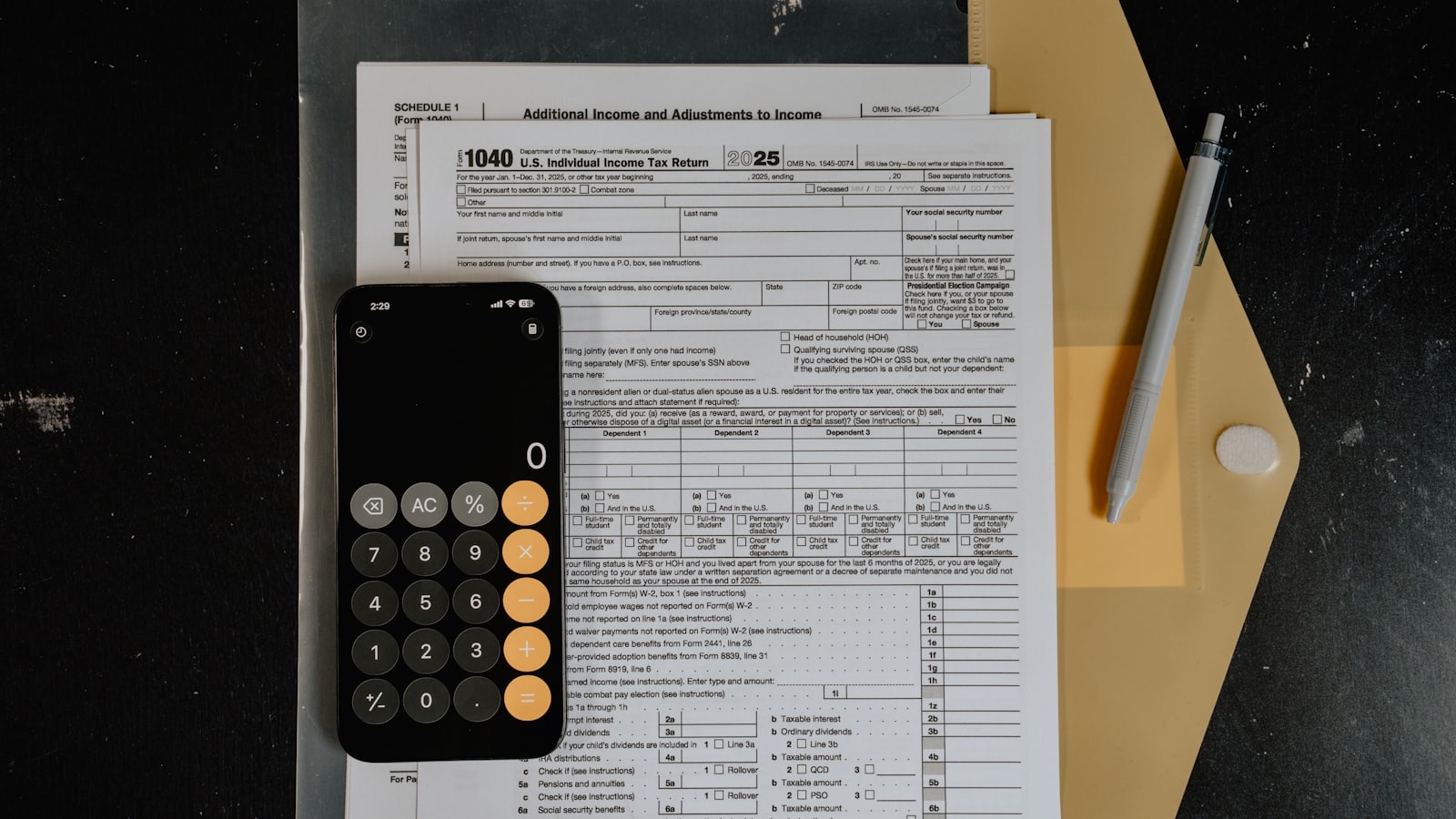
The credit is claimed on Form 6765. A qualified small business electing the payroll offset applies it on Form 8974 against employer Social Security tax on the quarterly Form 941. Because the IRS has increased documentation requirements — recent versions of Form 6765 ask for more project-level detail — many small businesses work with a specialist to scope activities, calculate QREs, and assemble the support.
- A list of projects and business components you developed or improved during the year
- Payroll records identifying employees who performed or directly supported R&D, with time allocations
- Invoices for supplies and prototypes consumed in the research
- Contracts and invoices for any third-party (contract) research
- Cloud and server invoices for computing used in development
- Project notes, design documents, test results, and version histories that show experimentation
To elect the payroll offset, a business generally must have less than $5 million in gross receipts for the current year and no gross receipts more than five years ago — in practice, a company in its first five years of revenue. This is what lets a pre-profit startup convert the credit into real cash by reducing its quarterly payroll-tax deposits rather than waiting for income-tax liability.
The R&D credit is worth far more than most small businesses realize, and it is not reserved for tech. If your team is resolving genuine technical uncertainty through experimentation, run the four-part test against each project, capture the wages, supplies, and contract research as the work happens, and — if you're an early-stage company — elect the payroll offset to turn the credit into cash. The businesses that win the credit are the ones that document as they go, not the ones that reconstruct in April.
Find out what your R&D work is worth
MK Tax & Accounting scopes your qualifying activities, calculates your qualified research expenses, and assembles documentation that survives IRS scrutiny — including the payroll offset for early-stage companies.
Talk to a tax proSources
- IRS — Research Credit, Internal Revenue Code Section 41 (IRS.gov)
- IRS — Instructions for Form 6765, Credit for Increasing Research Activities (IRS.gov)
- IRS — Qualified Small Business Payroll Tax Credit for Increasing Research Activities, Form 8974 (IRS.gov)
- IRS — About Form 941, Employer's Quarterly Federal Tax Return (IRS.gov)
- Internal Revenue Code Section 39, Carryback and carryforward of unused credits
- Inflation Reduction Act of 2022 — increase of the payroll-tax offset limit to $500,000 (Congress.gov)
Frequently asked questions
No. The credit applies across manufacturing, engineering, software, food and beverage, agriculture and more. The test is whether you're resolving technical uncertainty through experimentation to develop or improve a product, process or software — not whether you have a lab.
Often yes. A qualified small business (generally under $5M in gross receipts and within its first five years) can apply up to $500,000 of the credit against employer payroll taxes instead of income tax — delivering cash savings even with no income-tax liability.
Contemporaneous documentation tying employees, hours, supplies and contract research to specific qualifying projects, and showing how each meets the four-part test. Records created as the work happens are far stronger than reconstructions.
A qualified small business can apply up to $500,000 of the R&D credit per year against employer payroll taxes — first against the employer share of Social Security tax, then against the employer share of Medicare tax. The election is made on Form 6765 and applied on Form 8974 with your quarterly Form 941, delivering cash savings even with no income-tax liability.

