









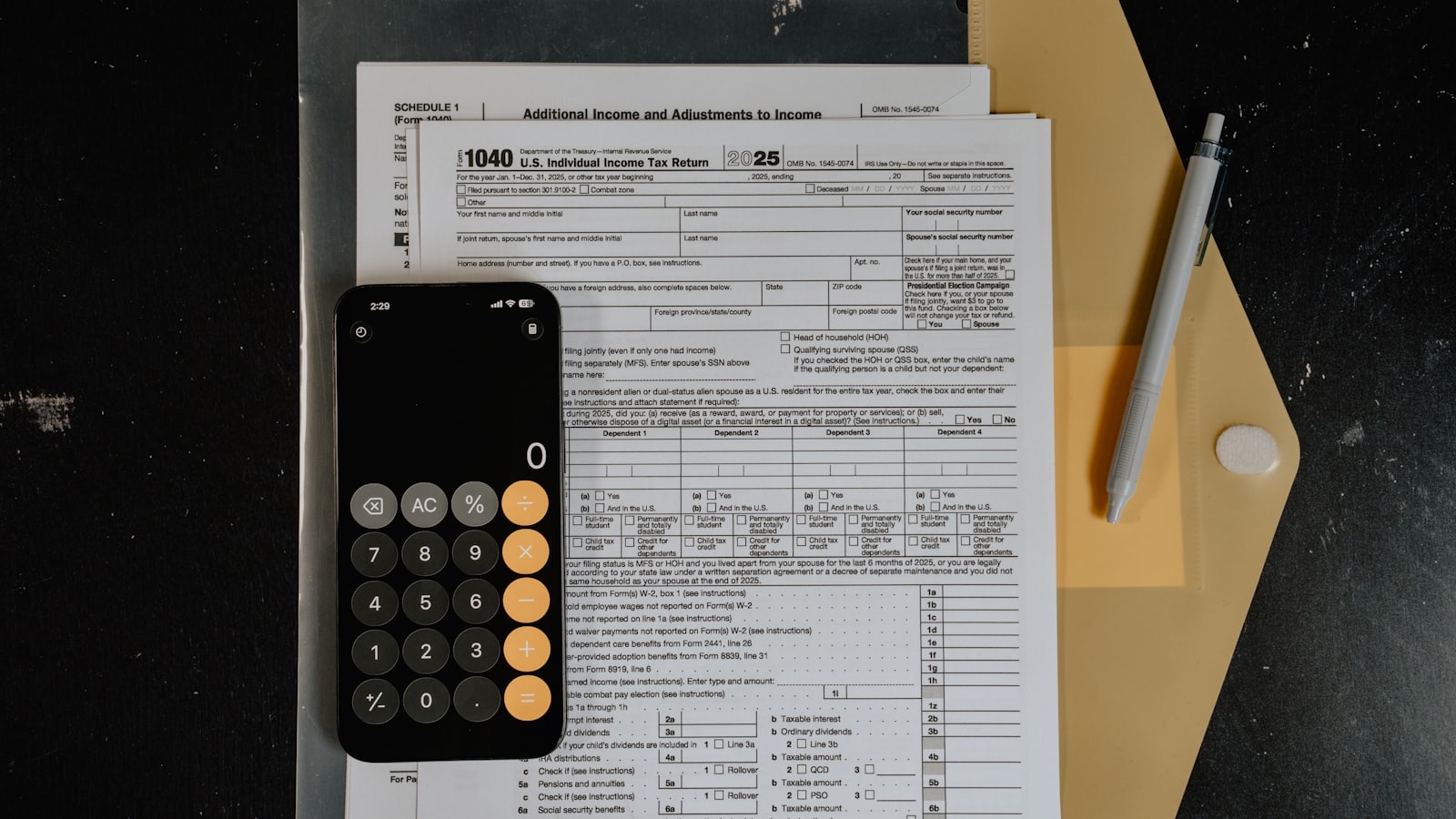







Small-business tax compliance is not an April deadline — it's a year-round cadence of estimated payments, payroll deposits, and information returns, each with its own date and its own penalty for slipping. The individual and pass-through estimated-tax installments land April 15, June 15, September 15, and January 15. Payroll tax deposits run monthly or semiweekly depending on your history. W-2s and 1099-NECs are both due January 31. Miss any of these and the IRS charges interest and penalties that compound quietly until they surface as an unexpected notice.
The businesses that stay clean don't have better memories — they have a calendar. They know the safe harbor that shields them from the underpayment penalty (90% of this year's tax, or 100% of last year's — 110% if AGI tops $150,000), they deposit payroll taxes on the right schedule, and they treat January 31 as a hard wall for information returns. This guide lays out the federal compliance cadence month by month so nothing catches you off guard. Florida operators get a break here — with no state income tax, the calendar below is essentially the whole picture, where a California or New York business layers a second set of state deadlines on top.
The four pillars of the compliance year
Before the month-by-month view, it helps to see the four recurring obligations that generate almost every deadline a small business faces. Everything on the calendar is one of these repeating on a schedule.
| Obligation | What it covers | Rough cadence |
|---|---|---|
| Estimated income tax | Income and self-employment tax not covered by withholding | Quarterly — Apr, Jun, Sep, Jan |
| Payroll tax deposits | Withheld income tax plus Social Security and Medicare | Monthly or semiweekly |
| Payroll returns | Form 941 (quarterly) and Form 940 (FUTA, annual) | Quarterly / annual |
| Information returns | W-2s to employees, 1099-NECs to contractors | Annual — due January 31 |
If your business has no employees and no contractors, only the estimated-tax pillar applies to you personally. Add a payroll and the deposit and return pillars switch on. Pay contractors and the information-return pillar joins in. Most growing businesses end up carrying all four at once — which is exactly when a calendar stops being optional.
First quarter: the January wall and the April estimate
January is the busiest compliance month of the year, and it front-loads the calendar. The recipient copies and government filings for the prior year's W-2s and 1099-NECs are all due by the 31st, with no grace period for the government copy the way older rules once allowed.
January 15
Fourth-quarter estimated tax payment for the prior tax year is due (the 4th installment of the year that just ended).
January 31
Furnish W-2s to employees and file with the SSA; furnish 1099-NECs to contractors and file with the IRS. File Form 941 for Q4 and Form 940 (FUTA) for the year — or by February 10 if all deposits were made on time.
March 15
Calendar-year S-corporations (Form 1120-S) and partnerships (Form 1065) file their returns — or file Form 7004 for a six-month extension.
April 15
Individual returns (Form 1040), C-corporation returns (Form 1120), and the first estimated payment of the new tax year are all due.
The trap in the first quarter is treating April 15 as the whole story. April 15 is simultaneously the filing deadline for last year and the first estimated payment for this year. Owners who send a big check for last year's balance and forget the current-year estimate start the new year already behind on the safe harbor.
Second and third quarters: the estimated-tax rhythm
The middle of the year is quieter, dominated by estimated-tax installments and the quarterly payroll return. The estimated-tax periods are famously uneven — the "second quarter" payment covers only two months, which is why June feels like it arrives fast.
| Date | Payroll return | Estimated tax |
|---|---|---|
| April 30 | Form 941 for Q1 due | — |
| June 15 | — | 2nd installment (covers Apr–May) |
| July 31 | Form 941 for Q2 due | — |
| September 15 | Extended 1120-S / 1065 returns due | 3rd installment (covers Jun–Aug) |
| October 15 | Extended 1040 / 1120 returns due | — |
| October 31 | Form 941 for Q3 due | — |
Two dates on this table quietly trip people up. September 15 is both the third estimated installment and the final deadline for extended partnership and S-corp returns — a pass-through owner can owe money and file a return on the same day. October 15 is the last call for extended individual and C-corp returns; there is no further extension, and a return filed after it is simply late.
Payroll deposits: the schedule that runs underneath everything
Payroll tax deposits don't appear on a neat quarterly grid — they follow a deposit schedule the IRS assigns you based on your payroll history during a lookback period. Getting the schedule wrong is one of the most common and most avoidable payroll penalties.
Monthly depositor
- Reported $50,000 or less in payroll taxes during the lookback period
- Deposits are due by the 15th of the following month
- Simpler cadence, suited to smaller payrolls
- Still files Form 941 quarterly
Semiweekly depositor
- Reported more than $50,000 during the lookback period
- Wednesday/Friday timing based on the payday
- Any single deposit of $100,000+ triggers a next-day rule
- Also files Form 941 quarterly
Regardless of your normal schedule, if your accumulated payroll tax liability reaches $100,000 or more on any day, you must deposit it by the next business day — and a monthly depositor who hits that threshold becomes a semiweekly depositor for the rest of the year and the next. This rule catches fast-growing businesses that add a large payroll run and don't realize their deposit timing just changed.
Building the calendar backward from the deadlines
The reason compliance calendars fail is that they list due dates without the prep work that has to precede them. A working calendar schedules the preparation, not just the deadline. The information-return season is the clearest example: January 31 is impossible to hit cleanly if you start collecting W-9s on January 15.
- Collect W-9s from every contractor before their first payment — not in January
- Reconcile payroll and contractor totals in the first week of the month they're due
- Set estimated-tax reminders two weeks before each installment date, not the day of
- Confirm your payroll deposit schedule at the start of each calendar year
- Track your combined information-return count against the 10-return e-file threshold
- Calendar the extended-return deadlines (Sep 15, Oct 15) even if you plan to file on time
The payoff of running the year this way is that no single month becomes a crisis. Each obligation gets handled when it's small and routine, instead of piling up into a year-end scramble that invites errors and late penalties.
Small-business tax compliance is a cadence, not a deadline. Anchor your year to four dates — the estimated installments on the 15th of April, June, September, and January — then layer in the January 31 information-return wall, your monthly or semiweekly payroll deposits, and the quarterly Form 941. Meet the safe harbor (90% of this year or 100% of last year, 110% above $150,000 AGI) and you're shielded from the underpayment penalty even in a strong year. Schedule the prep work, not just the due dates, and the whole calendar runs quietly in the background.
Put your whole tax year on autopilot
MK Tax & Accounting builds and runs your compliance calendar — estimates, payroll deposits, 941s, and information returns — so every deadline is met before it's a problem.
Talk to a tax proSources
- IRS — Publication 509, Tax Calendars (2026)
- IRS — Form 1040-ES, Estimated Tax for Individuals
- IRS — Publication 15 (Circular E), Employer's Tax Guide — deposit schedules
- IRS — General Instructions for Certain Information Returns (W-2, 1099)
- IRS — Instructions for Form 941 and Form 940
Frequently asked questions
For the 2026 tax year, estimated tax payments are due April 15, 2026, June 15, 2026, September 15, 2026, and January 15, 2027. The periods are uneven — the first covers three months, the second two, the third three, and the fourth four — so the June and January payments come faster than a strict quarter would suggest.
Both are due January 31 — you must furnish the recipient copy and file with the SSA (for W-2s) or the IRS (for 1099-NECs) by that same date. If you file 10 or more information returns in total across all form types, you must file them electronically.
An S-corp itself generally files Form 1120-S and passes income to owners, who pay estimated tax personally. A C-corp pays its own corporate estimated tax on Form 1120-W-style installments, due the 15th of the 4th, 6th, 9th, and 12th months of its tax year. The owner's individual estimates are separate from the entity's.
You generally avoid the estimated-tax penalty if you pay at least 90% of the current year's tax or 100% of last year's tax through withholding and estimates. That prior-year figure rises to 110% if your adjusted gross income exceeded $150,000. Meeting the safe harbor protects you even if you end up owing more at filing.
