









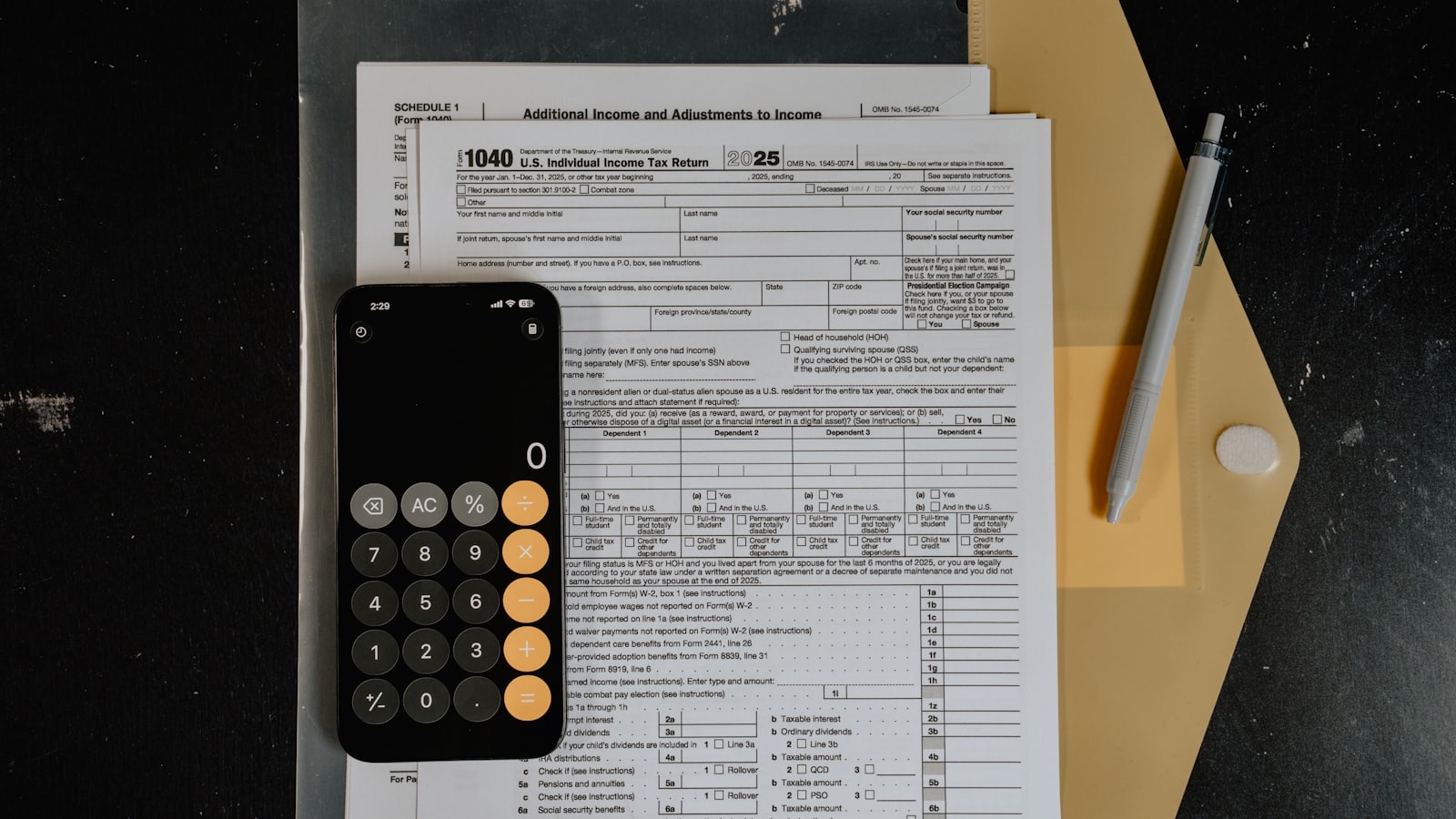







Payroll taxes carry a risk profile unlike any other small-business obligation: a portion of them isn't your money at all. When you withhold federal income tax and the employee's share of Social Security and Medicare from a paycheck, you're holding those dollars in trust until you remit them. Fail to, and the IRS can pursue the Trust Fund Recovery Penalty — 100% of the unpaid trust-fund amount — against you personally, right through the corporate liability shield that protects you from almost everything else. That is the single most important fact in payroll compliance.
The mechanical framework is manageable once you see its shape. You report withheld income tax and FICA quarterly on Form 941, you pay federal unemployment tax (FUTA) annually on Form 940, and you deposit the tax you've withheld on a monthly or semiweekly schedule the IRS assigns you. The employer share of FICA is a real cost to the business; the withheld portion never was. This guide walks the two forms, the deposit rules, and the trust-fund trap that turns a cash-flow problem into a personal liability.
Form 941: the quarterly workhorse
Form 941 is the return that ties your payroll year together. Every quarter you report the total wages paid, the federal income tax you withheld, and both the employer and employee shares of Social Security and Medicare. It reconciles what you owed against what you deposited during the quarter.
| Quarter | Period covered | Form 941 due |
|---|---|---|
| Q1 | January – March | April 30 |
| Q2 | April – June | July 31 |
| Q3 | July – September | October 31 |
| Q4 | October – December | January 31 |
The key thing to understand is that Form 941 is a reporting and reconciliation return, not usually a payment return. If you've deposited correctly all quarter, the 941 mostly confirms the numbers. If you made every deposit on time, you also get an automatic ten-day grace period — the return isn't due until the 10th of the following month rather than the last day. The tax itself gets paid through deposits, which is where the real timing discipline lives.
Form 940: the annual FUTA return
Form 940 handles federal unemployment tax, and it works differently from 941 in two important ways: it's annual, not quarterly, and the employer pays all of it. Employees never contribute a cent to FUTA — do not withhold it from paychecks.
The headline FUTA rate is 6.0% on the first $7,000 of each employee's wages. But employers who pay their state unemployment tax on time earn a credit of up to 5.4%, which drops the effective federal rate to 0.6% — roughly $42 per employee per year. The catch: if your state has an outstanding federal unemployment loan (a "credit reduction state"), part of that 5.4% credit is clawed back, raising your effective FUTA cost for that year. Check the current credit-reduction list before you file Form 940.
FUTA deposits follow their own rhythm. You deposit quarterly whenever your accumulated FUTA liability exceeds $500; if it stays under $500 in a quarter, you carry it forward. The annual Form 940 is due January 31, with the same automatic February 10 extension if every deposit was made on time.
Deposit schedules: where the timing risk really lives
The forms report; the deposits pay. Getting the deposit schedule right is the heart of payroll compliance, because a late deposit is penalized even if the return is eventually filed perfectly. The IRS assigns you a schedule based on a lookback period — it isn't something you choose.
Monthly depositor
- Reported $50,000 or less in the lookback period
- Deposit by the 15th of the following month
- Common for smaller and newer payrolls
- Files Form 941 quarterly like everyone else
Semiweekly depositor
- Reported more than $50,000 in the lookback period
- Paydays Wed–Fri: deposit by the following Wednesday
- Paydays Sat–Tue: deposit by the following Friday
- Larger or more frequent payrolls land here
If your accumulated tax liability reaches $100,000 or more on any single day, you must deposit it by the next business day — no matter your normal schedule. A monthly depositor who crosses that line also becomes a semiweekly depositor immediately, for the remainder of the year and all of the next. Fast-growing businesses that add a bonus run or a big hire often trip this rule without noticing their schedule just changed underneath them.
The trust-fund trap — the one that follows you home
Here is the fact that makes payroll compliance categorically different from every other tax obligation. The withheld income tax and the employee share of FICA are trust-fund taxes — you collected them on the government's behalf and never owned them. When a business under cash-flow stress "borrows" from payroll withholding to make payroll or pay a vendor, it's spending money that legally isn't the company's.
The taxes go unremitted
The business withholds correctly but, under cash pressure, doesn't deposit the trust-fund portion with the IRS.
The IRS identifies responsible persons
Anyone with authority over which bills get paid — owners, officers, bookkeepers, sometimes signers — can be deemed a responsible person.
Willfulness is assessed
Choosing to pay other creditors while knowing the trust-fund taxes were due is treated as willful. It doesn't require bad intent — just a conscious choice.
The penalty is assessed personally
The IRS can assess 100% of the unpaid trust-fund taxes against each responsible person individually, right through the LLC or corporation.
The corporate shield does not protect you from the Trust Fund Recovery Penalty. If cash is tight and you can only cover part of your obligations, the trust-fund portion of payroll tax should be treated as the most senior payable you have — ahead of vendors, ahead of rent, ahead of the owner's draw. It's the one bill where falling behind can reach your personal assets.
Keeping payroll compliance clean
Payroll compliance rarely fails because the rules are hard — it fails because the deposits are frequent and the trust-fund money is tempting when cash is short. A short operating checklist keeps the whole system honest.
- Confirm your monthly-vs-semiweekly deposit schedule at the start of each year
- Deposit trust-fund taxes first — treat them as the most senior payable in the business
- File Form 941 by the last day of the month after each quarter (or the 10th if deposits were timely)
- File Form 940 by January 31 and check the current credit-reduction state list
- Watch for the $100,000 next-day threshold on large payroll runs
- Reconcile your four 941s against your year-end W-2 totals before filing
Get those six habits right and payroll stops being a source of risk. The deposits go out on schedule, the returns reconcile, and the one penalty that can reach your personal assets never has a chance to form.
Payroll tax splits into two categories, and the distinction is everything. The employer share of FICA and FUTA is a real business cost you budget for. The withheld income tax and the employee FICA share are trust-fund money you never owned — and the Trust Fund Recovery Penalty lets the IRS pursue 100% of it against you personally if it goes unremitted. File Form 941 quarterly, Form 940 annually, deposit on your assigned monthly or semiweekly schedule, watch the $100,000 next-day rule, and always pay the trust-fund portion first. Do that, and payroll is a routine, not a risk.
Keep payroll compliant and penalty-free
MK Tax & Accounting manages your 941s, 940s, and deposit schedules — and keeps trust-fund taxes remitted on time so a cash crunch never becomes a personal liability.
Talk to a tax proSources
- IRS — Publication 15 (Circular E), Employer's Tax Guide
- IRS — Instructions for Form 941, Employer's Quarterly Federal Tax Return
- IRS — Instructions for Form 940, Employer's Annual FUTA Tax Return
- IRS — Trust Fund Recovery Penalty (Internal Revenue Code Section 6672)
- IRS — Topic No. 757 and Employment Tax Due Dates
Frequently asked questions
Form 941 is the quarterly return that reports withheld federal income tax plus the employer and employee shares of Social Security and Medicare. Form 940 is the annual return for federal unemployment tax (FUTA), which the employer pays entirely — employees never contribute to FUTA. You file four 941s a year and one 940.
The withheld income tax and the employee share of FICA are considered trust-fund taxes — money you hold in trust for your employees and the government. If a business fails to remit them, the IRS can assess a Trust Fund Recovery Penalty equal to 100% of the unpaid trust-fund amount against any responsible person individually, piercing the corporate shield.
The IRS assigns your schedule based on the total taxes you reported during a lookback period. Report $50,000 or less and you deposit monthly, by the 15th of the following month. Report more than $50,000 and you deposit semiweekly, on a Wednesday or Friday schedule tied to your payday. A single day's liability of $100,000 or more triggers a next-day deposit regardless.
The gross FUTA rate is 6.0% on the first $7,000 of each employee's annual wages. Employers who pay state unemployment tax on time generally receive a credit of up to 5.4%, dropping the effective FUTA rate to 0.6% — about $42 per employee per year. States with unpaid federal unemployment loans can lose part of that credit.
