









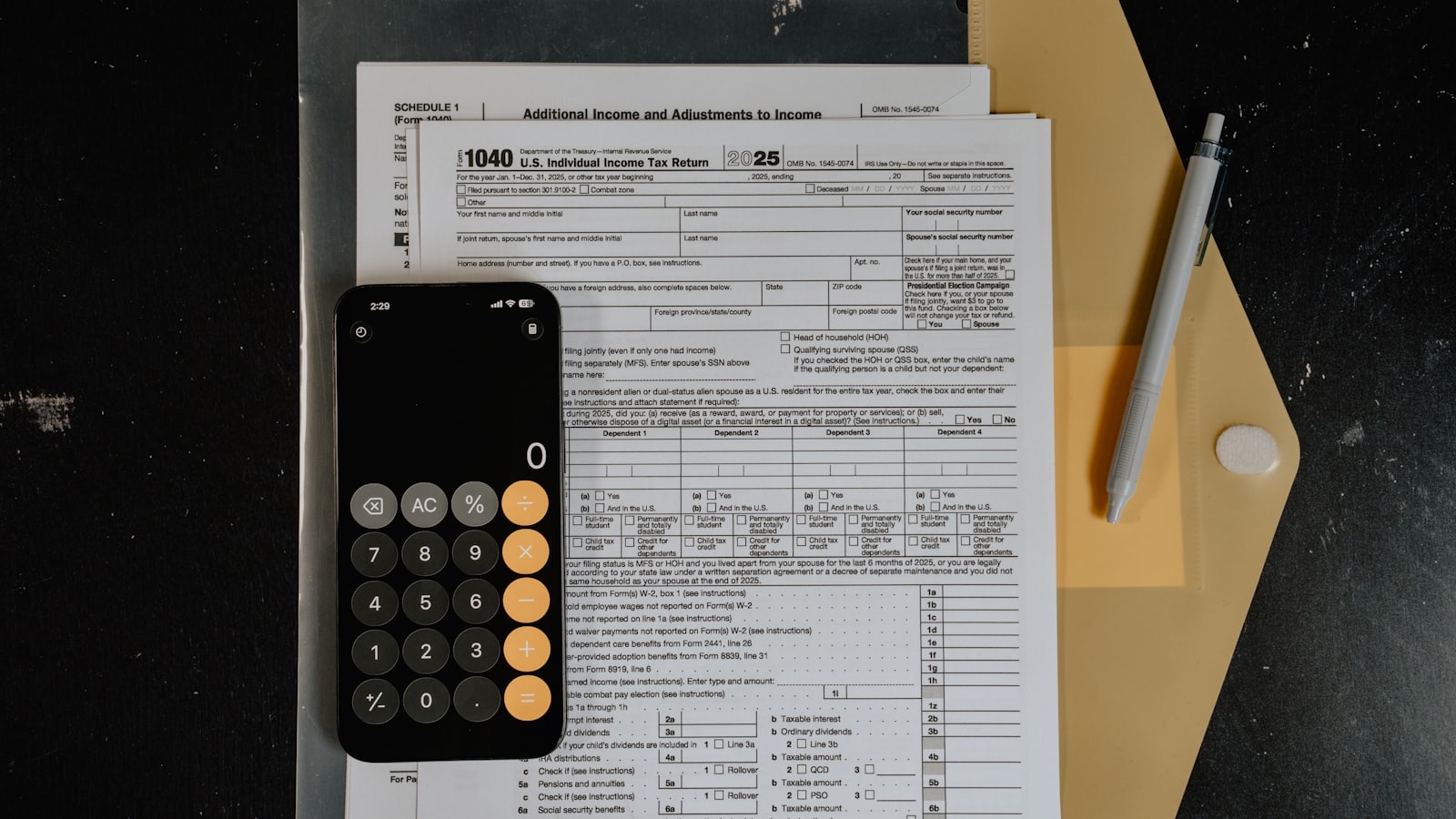






Earn a dollar of profit in another country and two governments have a claim on it: the country where you earned it, and the United States, which taxes its citizens, residents, and domestic corporations on worldwide income. Without a fix, that dollar gets taxed twice. The foreign tax credit (FTC) is the fix — it lets you offset your US tax dollar-for-dollar with the income taxes you already paid abroad, so the same income isn't taxed at home a second time.
The catch is that you rarely get to credit every foreign dollar you paid. A limitation caps the credit at the US tax attributable to your foreign-source income, and the calculation is done separately across income baskets — passive, general, GILTI, foreign branch, and more. Corporations run the whole computation on Form 1118; individuals use Form 1116. Get the sourcing and basketing right and you neutralize double tax cleanly; get them wrong and you either overpay or strand credits you could have used. This guide explains how the credit works and how to actually keep it.
Credit or deduction — start with the right choice
A US taxpayer paying foreign income tax has two options, and picking the wrong one leaves money on the table. You can credit the foreign tax, reducing your US tax bill dollar-for-dollar, or deduct it, reducing only your taxable income. Because a credit attacks the tax itself and a deduction only shrinks the base, the credit is worth far more in almost every case.
There's a rule that keeps you from cherry-picking: for a given year, you generally must choose one method for all creditable foreign taxes — you can't credit the high-taxed income and deduct the rest. So the decision is made in aggregate, per year.
Foreign tax CREDIT
- Reduces US tax dollar-for-dollar
- Almost always the more valuable option
- Subject to the Section 904 limitation
- Excess generally carries back 1 year, forward 10
- Corporations file Form 1118; individuals Form 1116
Foreign tax DEDUCTION
- Reduces taxable income, not tax
- Worth only your marginal rate on the amount
- No basket limitation to navigate
- Nothing to carry over
- Rarely better — mainly when the credit is severely limited
The practical default is the credit. The deduction becomes worth a second look only when the limitation would sideline most of your credit anyway — a narrow set of facts worth modeling rather than guessing.
The limitation: the number that decides how much you keep
The foreign tax credit is not unlimited. Under Section 904, the credit can't exceed the US tax that would fall on your foreign-source taxable income. Conceptually:
| Component | What it is |
|---|---|
| FTC limitation | US tax × (foreign-source taxable income ÷ total taxable income) |
| Purpose | Keep foreign credits from erasing US tax on US-source income |
| If foreign tax < limitation | You credit all of it; US may collect a small residual |
| If foreign tax > limitation | Excess is limited this year — carry it back 1, forward 10 |
The reason the limitation exists is straightforward: the credit is meant to relieve double tax on foreign income, not to shelter US-source income. So the US only lets you use foreign credits up to the US tax on the foreign slice. When your foreign operations sit in a higher-tax country than the US, you'll often be limited — you paid more abroad than the US would have charged, and the excess waits in carryover. When they sit in a lower-tax country, you credit everything and pay a US top-up.
The limitation is a fraction, and its numerator is foreign-source taxable income — so how income and, critically, deductions are sourced drives the answer. Interest expense, R&D, and stewardship costs get apportioned between US and foreign source under detailed rules, and mis-apportioning them can quietly shrink your allowable credit. This is why the FTC computation lives or dies on clean sourcing, not just on the raw foreign taxes paid.
Baskets: why the credit is computed category by category
You don't compute one blended limitation across all your foreign income. Section 904 requires a separate limitation for each category — the "baskets." Baskets stop a taxpayer from blending high-taxed income in one category with low-taxed income in another to soak up credits that would otherwise be limited.
| Basket | Typical contents |
|---|---|
| Passive category | Dividends, interest, rents, royalties, most portfolio-type income |
| General category | Active business income that isn't in another basket |
| GILTI (Section 951A) | Global Intangible Low-Taxed Income inclusions from CFCs |
| Foreign branch | Income of a US person's foreign branches / disregarded entities |
| Treaty re-sourced | Income re-sourced to foreign under a tax treaty, computed separately |
Because the limitation is figured per basket, excess credits in one basket generally can't rescue a shortfall in another. High-taxed passive income can't free up credits against low-taxed general income, and GILTI credits are ring-fenced in their own basket with their own rules. In practice this means two operations with the same total foreign tax can produce very different usable credits depending on which baskets the income lands in — another reason planning happens before the income is earned, not at filing time.
Carrybacks, carryforwards, and not losing the excess
When your foreign taxes in a basket exceed that basket's limitation, the excess isn't gone. Under Section 904(c), unused foreign taxes generally carry back one year and forward ten — within the same basket. That's a real second chance, but only if you have limitation to absorb them in another year.
Compute the credit by basket this year
Match foreign taxes to their basket and apply each basket's Section 904 limitation separately.
Identify the excess
In any basket where foreign taxes paid exceed the limitation, the difference is your unused credit for the year.
Carry back one year
Apply the excess to the immediately preceding year first, refiling if it frees up a refund and there was room in that basket.
Carry forward up to ten
Any remaining excess carries forward up to ten years, usable only when a future year has spare limitation in the same basket.
Track it by basket, every year
Carryovers are basket-specific and expire — a schedule that follows each basket's excess year over year is what keeps credits from silently lapsing.
The failure mode here is quiet: a company generates excess GILTI-basket credits, never has room to use them, and lets a ten-year clock run out without noticing because nobody tracked the basket-level carryover. A simple, maintained FTC carryover schedule is cheap insurance against forfeiting credits you already earned.
Form 1118, Form 1116, and getting the filing right
The credit is claimed on a form, and the form is where the sourcing and basketing get formalized. Corporations file Form 1118; individuals file Form 1116. Both require you to lay out foreign-source income and deductions by basket, the foreign taxes paid or accrued, and the resulting limitation.
- Foreign-source income identified and separated into the correct baskets
- Deductions (especially interest and R&D) apportioned between US and foreign source
- Foreign income taxes documented — paid or accrued, converted to US dollars at the right rate
- The Section 904 limitation computed separately for each basket
- Carryover schedules attached, tracking each basket's excess back 1 and forward 10
- Only creditable income taxes claimed — foreign VAT, sales, and most non-income levies don't qualify
One common error worth flagging: not every foreign payment is a creditable income tax. Foreign value-added tax, sales tax, and various non-income levies generally do not qualify for the credit — only foreign income taxes (and taxes in lieu of income tax) do. Claiming a non-creditable tax is a straightforward way to draw IRS attention, so the documentation should establish that each foreign tax you're crediting is genuinely an income tax.
The foreign tax credit is how a US business avoids paying tax twice on the same foreign dollar — and it beats a deduction almost every time, so default to the credit. But the Section 904 limitation caps it at the US tax on your foreign-source income, and it's computed separately by basket (passive, general, GILTI, foreign branch), so high-taxed income can't rescue low-taxed income across categories. Source your income and deductions carefully, credit only genuine foreign income taxes, and — above all — keep a basket-level carryover schedule so excess credits carry back 1 and forward 10 instead of expiring unnoticed. Then report it all cleanly on Form 1118 (corporations) or 1116 (individuals).
Paying tax abroad and at home on the same income?
Sourcing rules, credit baskets, and carryovers all affect whether you actually capture the Foreign Tax Credit you've earned. Talk to our team about your foreign income before you file, so you don't end up paying tax twice.
Talk to a tax proSources
- IRC Section 901 — Taxes of Foreign Countries and of Possessions of the United States
- IRC Section 904 — Limitation on Credit (baskets, carryback and carryforward)
- IRC Section 903 — Credit for Taxes in Lieu of Income Taxes
- IRS — Instructions for Form 1118 (Foreign Tax Credit — Corporations)
- IRS — Instructions for Form 1116 (Foreign Tax Credit — Individual, Estate, or Trust)
- IRS Publication 514 — Foreign Tax Credit for Individuals
Frequently asked questions
The foreign tax credit lets a US taxpayer offset US tax dollar-for-dollar with income taxes paid to a foreign country on the same income. Because the US taxes its residents and citizens on worldwide income, foreign profits would otherwise be taxed twice — once abroad and once at home. The credit is the primary tool for preventing that.
A credit reduces your US tax dollar-for-dollar, while a deduction only reduces taxable income — so a credit is almost always more valuable. You must choose one method for all creditable foreign taxes in a given year; you can't credit some and deduct others. Occasionally a deduction wins when the credit is heavily limited, but that's the exception.
The credit can't exceed the US tax that would apply to your foreign-source income — computed roughly as US tax times foreign-source taxable income over total taxable income. This stops the credit from wiping out US tax on US-source income. Foreign taxes above the limit aren't lost: they generally carry back 1 year and forward 10.
The limitation is computed separately for categories ("baskets") of income — including passive income, general category income, GILTI, foreign branch income, and treaty-resourced income. Baskets stop high-taxed income in one category from freeing up credits against low-taxed income in another. Corporations report the computation by basket on Form 1118.
