









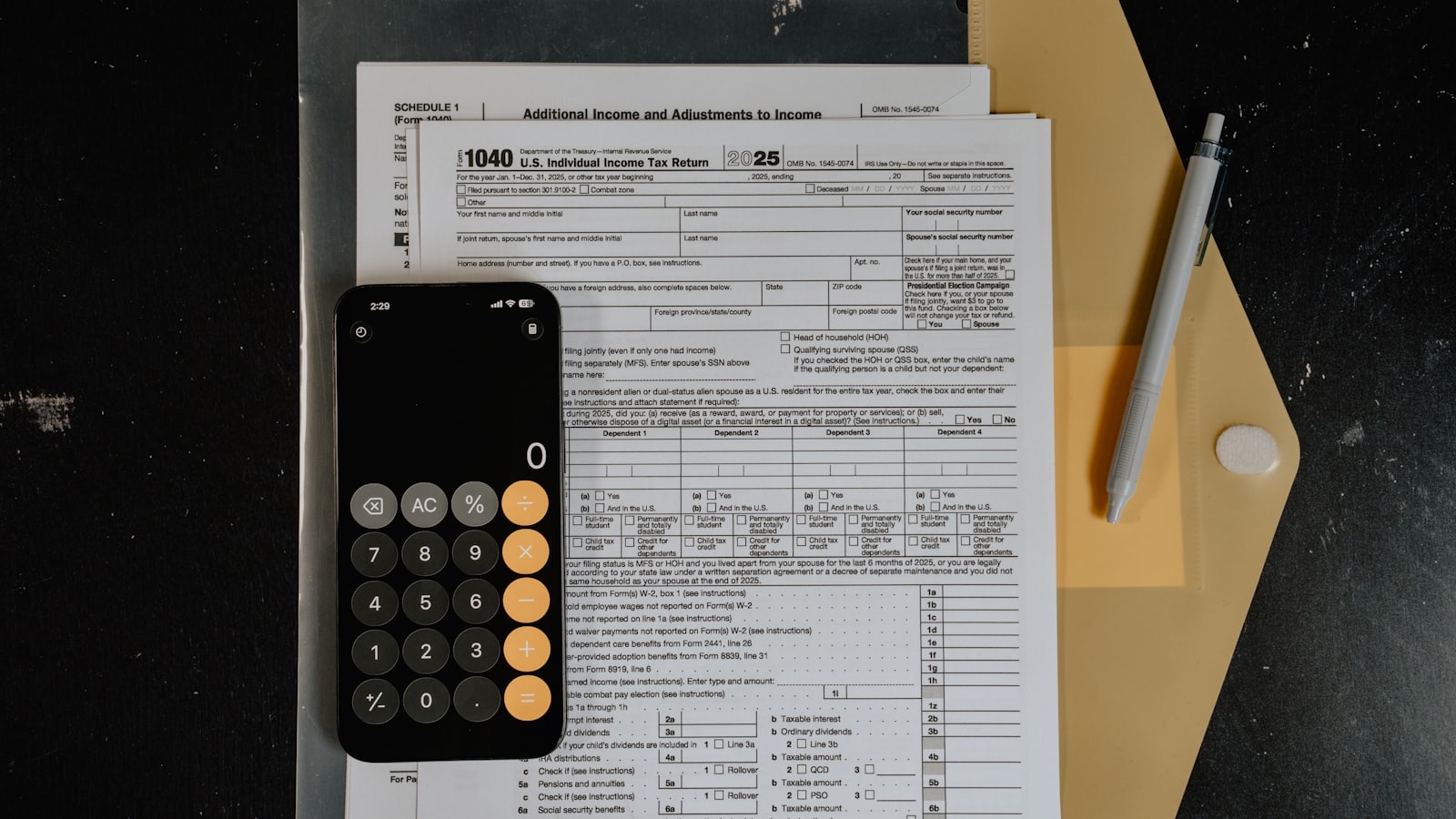






Federal tax-exempt status under 501(c)(3) is what lets a charity avoid income tax and lets its donors deduct their gifts — and getting it means clearing an eligibility bar, filing the right application, and then staying compliant for the life of the organization. There are two paths. Small startups that expect $50,000 or less in annual gross receipts and hold $250,000 or less in assets can usually file the streamlined Form 1023-EZ online for a $275 user fee and often get approved in weeks. Everyone else files the full Form 1023 — roughly forty pages of narratives, budgets, and schedules — for a $600 fee, with a review that typically runs several months.
The single most valuable planning fact is the 27-month rule: if you file your application within 27 months of the end of the month you were legally formed, approval is generally retroactive to your formation date. File late and your exemption usually starts only from the day you applied, leaving a taxable gap. And approval is the starting line, not the finish — the compliance obligations that follow are what actually keep the status alive, and three missed annual filings end it automatically.
Are you actually eligible for 501(c)(3)?
Before choosing a form, confirm you qualify at all. A 501(c)(3) must be organized and operated exclusively for one of the exempt purposes Congress named — and its structure has to lock those purposes in.
- Organized for an exempt purpose: charitable, religious, educational, scientific, literary, or similar
- Formed as a corporation, trust, or unincorporated association with governing documents on file
- A purpose clause and a dissolution clause that dedicate assets to exempt purposes permanently
- No part of net earnings benefits any private individual or insider
- No substantial lobbying, and an absolute ban on political campaign intervention
- An EIN obtained from the IRS before applying
The dissolution clause trips up many first-timers: your governing document must state that if the organization ever winds down, its remaining assets go to another exempt purpose — not back to founders or members. Get the formation documents right before you apply, because the IRS reviews them as part of the exemption decision.
Form 1023 vs. Form 1023-EZ: which one you file
Both applications lead to the same 501(c)(3) determination, but the effort and eligibility differ sharply. The EZ is faster and cheaper — if you genuinely qualify and stay within its limits.
Form 1023-EZ
- Expecting $50,000 or less in annual gross receipts
- Total assets of $250,000 or less
- Filed online through Pay.gov with a $275 user fee
- A short eligibility worksheet, no narrative or budget attachments
- Often approved in a matter of weeks
Form 1023 (full)
- Larger organizations or any that fail an EZ eligibility item
- Required for churches, schools, hospitals, and certain others
- About 40 pages plus schedules, with a $600 user fee
- Detailed narrative of activities, multi-year budgets, and conflict-of-interest policy
- Review commonly takes several months
Certain organizations are barred from the EZ regardless of size — churches, schools, hospitals, and supporting organizations among them — and must use the full 1023. Run the IRS Form 1023-EZ Eligibility Worksheet before assuming you qualify; answering "yes" to any disqualifying item means the full form.
The application timeline, step by step
Approval is a sequence, not a single event. Building the pieces in order — and respecting the 27-month window — keeps your exemption retroactive to formation.
Form the entity under state law
Incorporate (or create your trust or association) with a purpose clause and dissolution clause that satisfy IRS requirements. This is the legal birth of the organization.
Get an EIN
Apply for an Employer Identification Number from the IRS. You need it to open bank accounts and to file the exemption application.
Choose and prepare the right application
Run the 1023-EZ eligibility worksheet. If you qualify, file the EZ on Pay.gov. If not, assemble the full 1023 with narratives, budgets, and schedules.
File within 27 months and pay the user fee
Submit before the 27-month window closes to secure retroactive exemption to your formation date. Pay $275 (EZ) or $600 (full 1023).
Respond to any IRS follow-up
Full 1023 reviews sometimes generate questions from an EO specialist. Answer promptly; delays here stretch the timeline.
File within 27 months of the end of the month you were formed and your exemption relates back to your formation date — donations from day one are deductible and early income is covered. Miss the window and, in most cases, exemption is recognized only from the postmark date of your application. That leaves a stretch where your organization was operating without recognized exempt status, which can mean tax on early revenue and non-deductible early gifts. Apply early.
Public charity or private foundation?
Your 1023 also determines whether the IRS classifies you as a public charity or a private foundation. The default assumption is private foundation unless you show broad public support — and the two carry very different rules.
| Feature | Public charity | Private foundation |
|---|---|---|
| Typical funding | Many donors, grants, program revenue | One or a few sources (family, company, endowment) |
| Annual return | Form 990, 990-EZ, or 990-N | Form 990-PF (regardless of size) |
| Deduction limits for donors | More generous | More restrictive |
| Special excise taxes | Generally none | Excise taxes and self-dealing rules apply |
| Support test to prove status | Public support test on Schedule A | No public-support test required |
Most operating charities want public-charity status because of its friendlier donor limits and simpler ongoing rules. Reaching it usually means demonstrating diversified public support on Schedule A, so structure your fundraising with that test in mind from the start.
Staying compliant after approval
The determination letter is not a finish line — it's a set of ongoing duties. Most lost exemptions trace back to organizations that got approved and then stopped paying attention.
- File a 990-series return every single year — three consecutive misses trigger automatic revocation
- Keep activities within your stated exempt purpose; report material changes to the IRS
- Avoid private benefit, inurement, and any political campaign intervention
- Pay tax on unrelated business income and file Form 990-T when it applies
- Register and renew with your state's charity regulator where required
- Keep board minutes, financial records, and a conflict-of-interest policy current
Florida — where MK Tax & Accounting is based — imposes no state income tax, so a Florida nonprofit's ongoing burden is concentrated at the federal level plus the state's charitable-solicitation registration rather than a separate state income-tax exemption filing. Wherever you operate, don't assume federal approval covers your state obligations; charitable registration and state exemption are separate tracks that many new organizations overlook.
Confirm eligibility first: an exempt purpose, the right governing clauses, an EIN, and no private benefit. Then pick your path — the $275 Form 1023-EZ if you expect $50,000 or less in receipts and $250,000 or less in assets and aren't otherwise barred, or the full $600 Form 1023 for anything larger or more complex. File within 27 months of formation to keep exemption retroactive to day one, aim for public-charity classification if you can support it, and treat the determination letter as the start of annual compliance — file your 990 every year, stay within your purpose, and watch unrelated business income. Approval is easy to lose and expensive to win back.
Get your exemption right the first time
MK Tax & Accounting confirms your eligibility, files the correct 1023 or 1023-EZ, and sets up the annual compliance that protects your status. Based in Oakland Park, FL, serving new nonprofits across South Florida.
Start your 501(c)(3) applicationSources
- IRS — About Form 1023, Application for Recognition of Exemption Under Section 501(c)(3)
- IRS — About Form 1023-EZ and Eligibility Worksheet
- IRS — Application for Recognition of Exemption and the 27-Month Rule (Treas. Reg. 1.508-1)
- IRC Section 501(c)(3) — Exemption Requirements
- IRS — Life Cycle of a Public Charity / Compliance Guide for 501(c)(3) Public Charities
- IRS — Exempt Organizations: Public Charities and Private Foundations
Frequently asked questions
Form 1023 is the full, ~40-page exemption application with narratives, budgets, and schedules; it costs an $600 user fee. Form 1023-EZ is a streamlined online form for small organizations expecting $50,000 or less in annual gross receipts and $250,000 or less in assets, with a $275 user fee. Most small startups that qualify use the EZ; anything complex or larger uses the full 1023.
A Form 1023-EZ is often approved in a few weeks. The full Form 1023 typically takes several months, and complex applications can take longer. If the IRS approves you, exemption is generally retroactive to your formation date as long as you filed within 27 months of forming.
To get exemption retroactive to your date of formation, you generally must file the exemption application within 27 months of the end of the month in which you were legally formed. File later and exemption typically starts only from the postmark date of your application, leaving a taxable gap.
Approval is the beginning, not the end. You must file an annual 990-series return every year, keep your activities within your exempt purpose, avoid private benefit and prohibited political campaign activity, pay tax on any unrelated business income, and follow your state's charitable-registration rules. Three missed annual filings cost you the exemption automatically.
