









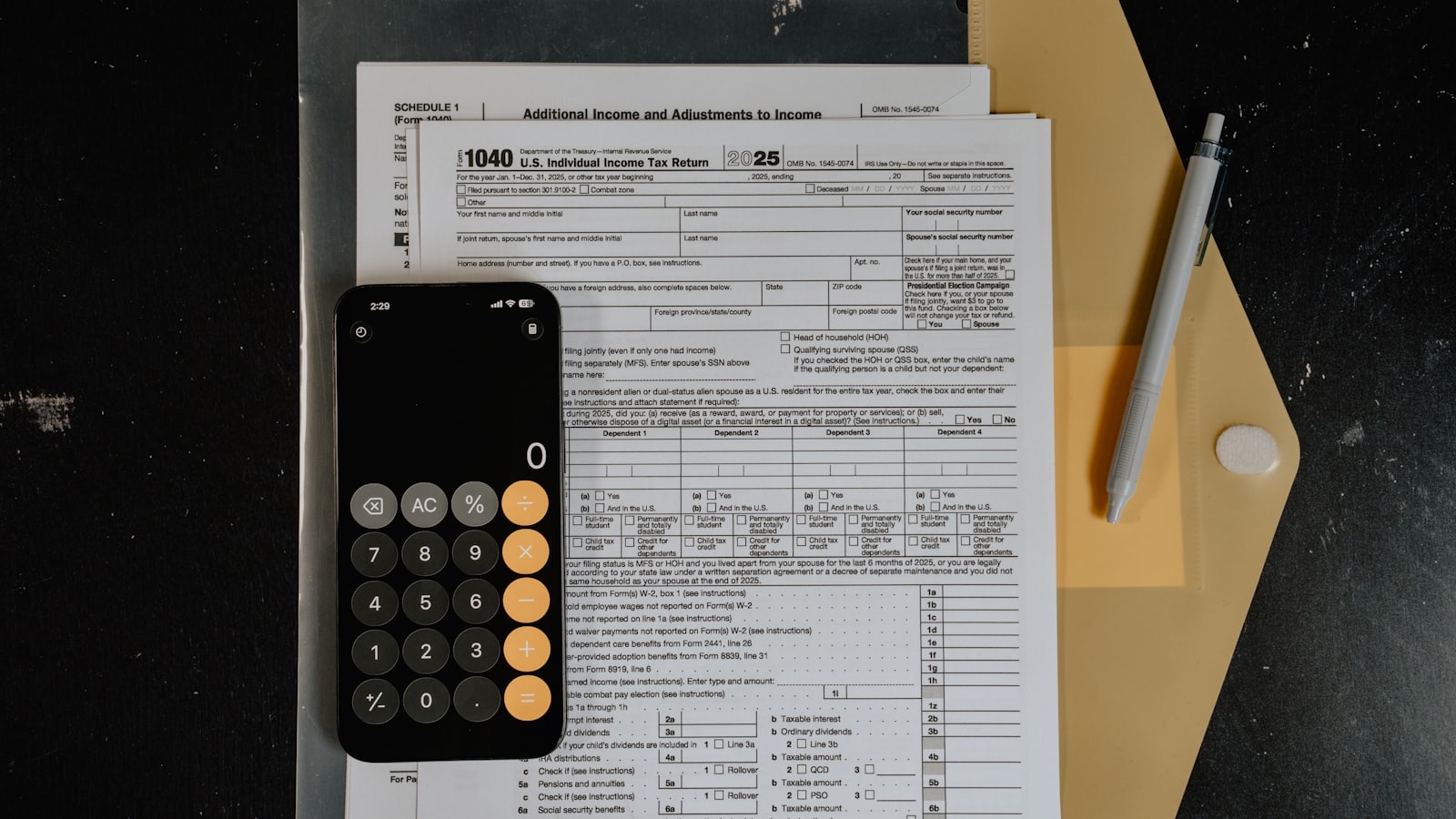







An Offer in Compromise (OIC) lets you settle a federal tax debt for less than the full amount you owe — sometimes dramatically less. But the "pennies on the dollar" advertising you hear on late-night radio badly misrepresents how it works. The IRS does not haggle, and it does not care about your story. It runs a formula. Your offer is accepted if it equals or exceeds your Reasonable Collection Potential — the most the IRS believes it could realistically collect from you before the collection statute expires. The application fee is $205, and in recent years the IRS has accepted roughly 30–40% of the offers it processes.
The reason most offers fail is not that the taxpayer offered too little — it's that they offered before understanding the math. Your RCP is a specific, calculable number: the equity in your assets plus a multiple of your monthly disposable income. If you compute it first, you know before you spend a dollar whether an OIC is viable, whether you should offer more, or whether a payment plan or Currently Not Collectible status is the better path. This guide walks the formula, the forms, and the realistic odds.
The three legal grounds for an offer
The IRS can accept an offer on only one of three bases. The overwhelming majority of accepted offers rest on the first.
| Ground | When it applies | How common |
|---|---|---|
| Doubt as to Collectibility | Your assets and income can't cover the full debt before the collection statute expires | The vast majority of accepted offers |
| Doubt as to Liability | There is a genuine dispute that you actually owe the assessed amount | Uncommon — usually resolved through audit or appeals instead |
| Effective Tax Administration | You could technically pay in full, but doing so would create economic hardship or be unfair | Rare — narrow, fact-specific cases |
Most people pursuing an OIC file on Doubt as to Collectibility — they genuinely cannot pay the balance in full, and the offer reflects what they realistically can pay. If you dispute that you owe the tax at all, an OIC is usually the wrong tool; audit reconsideration or the appeals process fits better.
Reasonable Collection Potential: the formula that decides everything
RCP is the number the IRS compares your offer against. Get within it and you are in serious contention; fall below it and you will almost certainly be rejected. It has two components.
Net realizable equity in assets
For each asset — home, vehicles, bank accounts, retirement accounts, investments — the IRS takes the quick-sale value (often about 80% of fair market value) minus what you owe on it. That net equity is added to your offer floor.
Future income component
Your average monthly gross income minus allowable living expenses gives monthly disposable income. The IRS multiplies that by 12 for a lump-sum cash offer or by 24 for a periodic-payment offer.
Add the two together
Net realizable equity plus the future-income multiple equals your RCP. Your offer must generally meet or exceed this figure to be accepted.
The future-income multiplier is why the lump-sum option is usually cheaper in total: 12 months of disposable income versus 24. If you can raise the cash, a lump-sum offer nearly always settles for less than a payment offer.
Allowable expenses: where the numbers are won or lost
Your monthly disposable income depends on which expenses the IRS lets you subtract. It does not simply accept your actual spending. Instead it applies Collection Financial Standards — national and local caps for categories of living expenses.
For food, clothing, and miscellaneous, the IRS applies national standard amounts based on household size. For housing, utilities, and vehicle operating costs, it applies local standards tied to your county. If your actual spending exceeds the standard, the excess generally is not counted — which raises your calculated disposable income and therefore your RCP. Certain expenses (taxes, court-ordered payments, some health care) are allowed at actual cost. Knowing which category each expense falls into before you file is often the difference between a viable offer and a rejected one.
The forms and the money you send with them
An OIC is a documentation-heavy filing. The core package is consistent regardless of grounds.
- Form 656, Offer in Compromise — the offer itself, stating the amount and payment terms
- Form 433-A (OIC) for individuals or 433-B (OIC) for businesses — the detailed financial statement supporting your RCP
- The $205 application fee (waived under Low Income Certification)
- The initial payment: 20% of a lump-sum offer, or the first installment of a periodic offer (also waived for qualifying low-income filers)
- Supporting documentation — bank statements, pay stubs, asset valuations, expense proof
Two payment structures exist. A lump-sum cash offer requires 20% down with the application and the balance in five or fewer payments after acceptance. A periodic-payment offer requires the first proposed installment with the application and continued monthly payments while the IRS reviews it — payments you keep making even before acceptance.
What acceptance actually takes — and the odds
The IRS accepts an offer that meets or exceeds RCP and is filed with a complete, accurate financial package. It rejects offers that lowball the formula, omit assets, or arrive incomplete.
Offers that tend to get accepted
- Offer amount meets or exceeds computed RCP
- All assets and income disclosed accurately
- Financial statement backed by documentation
- All required tax returns filed and current
- Estimated payments or withholding up to date for the current year
Offers that tend to get rejected
- Offer falls below RCP with no basis
- Undisclosed assets the IRS later finds
- Missing or unfiled prior-year returns
- Dissipated assets — money moved to look broke
- Ability to full-pay through an installment agreement instead
Before you file, you must be in current compliance: all required returns filed, and current-year estimated taxes or withholding on track. The IRS will not consider an offer from a taxpayer who is still falling behind. If your accepted offer's five-year compliance terms are later broken — a late return, a new balance — the IRS can default the agreement and reinstate the original debt in full, minus payments made.
The Florida angle and one strategic caveat
Run the RCP formula before you spend a cent on an offer. Value your assets at quick-sale, subtract what you owe on them, compute disposable income against the IRS's expense standards, and apply the 12x (lump-sum) or 24x (periodic) multiple. If your realistic offer meets that number, an OIC is worth pursuing; if it doesn't, an installment agreement or Currently Not Collectible status is the better move. Florida's lack of a state income tax means residents deal only with the federal side — one less balance to fold in, but no shelter from the federal formula. File in full current compliance, disclose everything, and document every figure. A clean, formula-backed offer is the one that gets accepted.
Find out if an Offer in Compromise is realistic for you
MK Tax & Accounting computes your Reasonable Collection Potential before you file, builds the 433 financial package, and negotiates directly with the IRS — so you don't spend $205 and months of work on an offer that never had a chance.
Talk to a tax proSources
- IRS — Form 656 Booklet, Offer in Compromise
- IRS — Form 433-A (OIC), Collection Information Statement for Wage Earners and Self-Employed Individuals
- IRS — Topic No. 204, Offers in Compromise
- IRS — Collection Financial Standards
- IRS Data Book — Offers in Compromise statistics
- Internal Revenue Code Section 7122 — Compromises
Frequently asked questions
In recent years the IRS has accepted roughly 30–40% of the Offers in Compromise it processes. The number of offers accepted has hovered around 12,000–17,000 per year. Acceptance depends entirely on whether your offer matches or exceeds your reasonable collection potential — not on hardship stories or negotiation skill.
The IRS calculates your Reasonable Collection Potential (RCP): the realizable equity in your assets plus your future monthly disposable income multiplied by 12 (for a lump-sum offer) or 24 (for a periodic-payment offer). Your offer must generally equal or exceed that number, so knowing your RCP before you file tells you whether an OIC is realistic.
The application fee is $205, plus an initial payment submitted with Form 656. Low-income taxpayers who meet the IRS's Low Income Certification guidelines are exempt from both the application fee and the initial payment. The fee is non-refundable even if the offer is rejected, though it is applied to your balance.
Yes. Once the IRS accepts your offer for processing, most levy activity is suspended while it is under review, and the 10-year collection statute is paused for the review period plus 30 days. However, penalties and interest continue to accrue on the underlying balance until the debt is resolved.
