









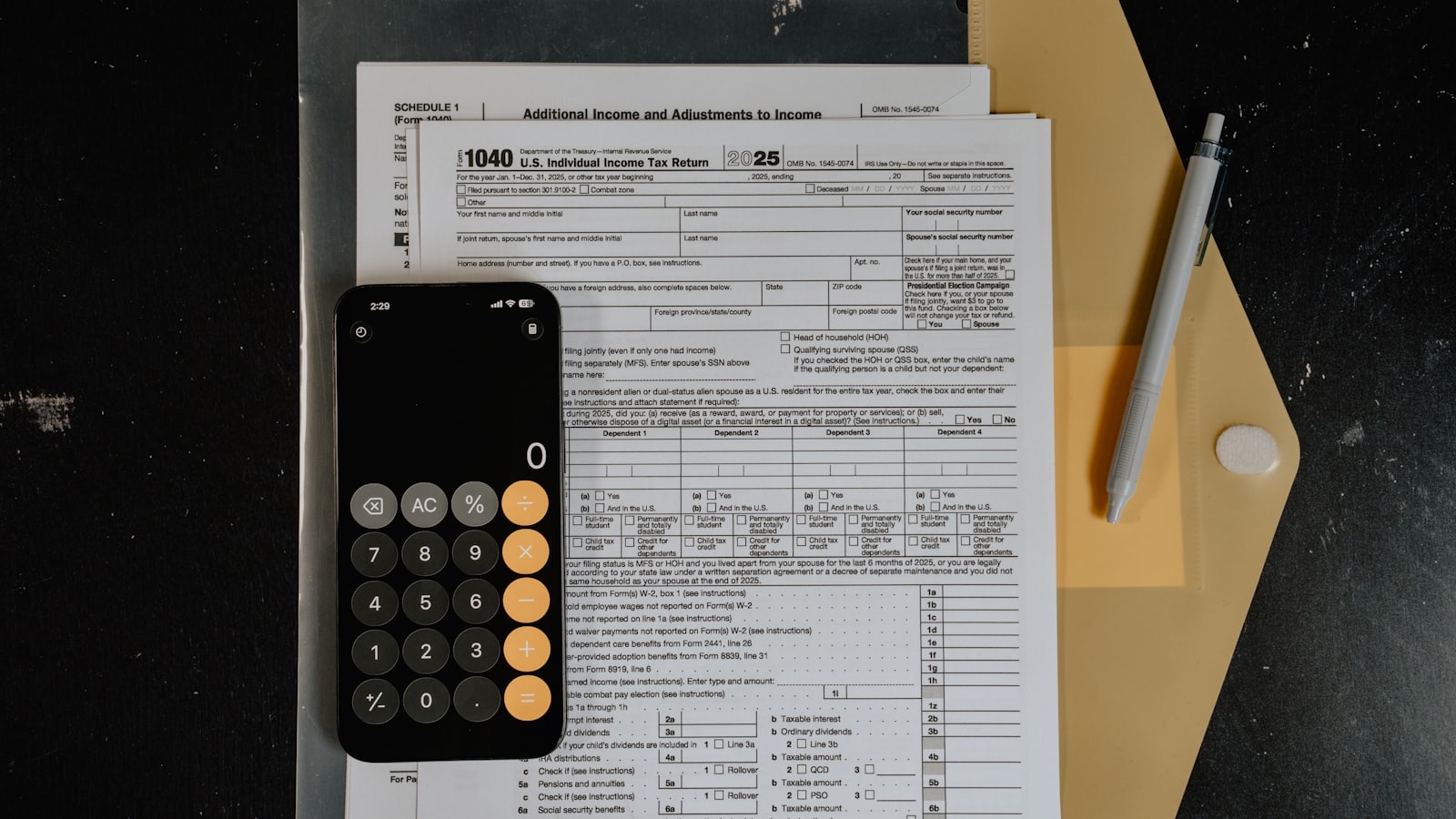






Every US citizen and green-card holder is taxed on their worldwide income, no matter where they live or where the money is earned. An American teaching in Seoul, running a design studio in Lisbon, or drawing a salary in Dubai still files a US return and still owes US tax on that foreign income — on top of whatever the host country collects. Congress built two mechanisms to soften that double hit: the Foreign Earned Income Exclusion (FEIE), which lets you exclude up to $130,000 of foreign earned income for 2025 on Form 2555, and the Foreign Tax Credit (FTC), which gives you a dollar-for-dollar credit on Form 1116 for income taxes paid to a foreign government. Used well, either can erase most or all of the double tax. Used wrong, you overpay — or lock yourself out of the exclusion for five years.
The two tools are not interchangeable, and the right choice turns on your host country's tax rate, your income level, and what other credits you're chasing. In a high-tax country like Germany or the UK, the Foreign Tax Credit usually wins outright and even banks carryover credits for later. In a zero-tax country like the UAE or a low-tax situation, the exclusion is often the only shield you have. And in many cases the smartest answer is a deliberate combination of both — exclude up to the limit, then credit the tax on everything above it. This is where a wrong DIY choice quietly costs thousands.
First, do you even qualify? The tax-home and residence tests
Neither tool is automatic. The Foreign Earned Income Exclusion requires two things: a tax home in a foreign country, and status as a qualified individual under one of two residence tests. The Foreign Tax Credit has no residence test — anyone who paid or accrued a foreign income tax can claim it — which is one reason it's the more flexible option.
Bona fide residence test
- You are a bona fide resident of a foreign country for an uninterrupted period that includes a full tax year
- Judged on intent, ties, and the nature of your stay — not a day count
- Best fit for people who have genuinely relocated abroad long-term
- Short trips back to the US are allowed without breaking residence
Physical presence test
- You are physically present in a foreign country 330 full days out of any consecutive 12-month period
- A pure day count — objective and easier to prove
- Best fit for the first year abroad or for people who move around
- Travel days and US days both count against your 330
Only earned income qualifies for the exclusion — wages, salary, professional fees, and self-employment income for services you actually performed abroad. Passive income (dividends, interest, rent, capital gains) never qualifies for the FEIE, though it can still generate a Foreign Tax Credit. That distinction matters: a retiree living on investment income abroad gets nothing from Form 2555 but may get real relief from Form 1116.
Form 2555 vs. Form 1116: how each one works
The exclusion and the credit reach the same goal — avoiding double taxation — by entirely different mechanics. The exclusion removes income from your return before tax is calculated. The credit calculates the tax normally, then offsets it with the foreign tax you already paid.
| Feature | FEIE (Form 2555) | FTC (Form 1116) |
|---|---|---|
| What it does | Excludes income from US tax | Credits foreign tax against US tax |
| Income covered | Earned income only | Earned and passive income |
| Residence test required | Yes | No |
| Best when | Host tax is low or zero | Host tax is high |
| Carryover of unused benefit | None | Yes — carry back 1 year, forward 10 |
| Effect on IRA / Child Tax Credit | Can eliminate the earned income needed to claim them | Preserves earned income for those credits |
The carryover is the underrated advantage of the credit. If you pay more foreign tax than your US liability on that income, the excess doesn't vanish — you carry it back one year and forward up to ten. Expats in high-tax countries often build a bank of carryover credits that shelter US tax in years when foreign tax happens to dip.
The high-tax country case: why the credit usually wins
If your host country taxes income at a higher effective rate than the US, the Foreign Tax Credit will typically zero out your US tax on that income — because you already paid more tax abroad than the US would have charged. The exclusion, by contrast, only shields income up to the annual cap; anything above $130,000 still gets taxed, and you've given up the ability to credit foreign tax on the excluded portion.
In a high-tax country, the credit not only eliminates your US tax on foreign wages but usually leaves surplus foreign tax you can carry forward. The exclusion caps out at $130,000 and preserves no carryover. For anyone earning above the cap in a place like the UK, Germany, or Australia, Form 1116 is almost always the stronger play.
The credit also preserves your earned income for other purposes. Excluded income under Form 2555 is not earned income for IRA contribution eligibility, and it can shrink the refundable Child Tax Credit and Earned Income Tax Credit. Families abroad sometimes discover that the FEIE saved them a little income tax while quietly costing them thousands in lost refundable credits.
The low-tax and zero-tax case: when the exclusion is your shield
Flip the scenario. If you live in a country with no income tax — the UAE, Qatar, the Cayman Islands, or a territorial-tax jurisdiction that doesn't tax foreign-source pay — you have no foreign tax to credit. Form 1116 gives you nothing because you paid nothing abroad. Here the exclusion is the whole game: it removes up to $130,000 from US tax and, with the foreign housing exclusion, can shelter a slice of your rent and utilities on top.
Confirm your qualifying period
Establish bona fide residence or hit 330 full days abroad in a 12-month window. Keep a travel log — the IRS asks for exact dates on Form 2555.
Exclude up to the annual limit
Apply the FEIE to your foreign earned income up to $130,000 (2025). Married couples who both work abroad can each claim their own exclusion.
Add the foreign housing exclusion
If your housing costs exceed a base amount tied to the exclusion, you can exclude qualifying excess housing expenses, subject to a location-based cap.
Credit any tax on the remainder
If you earn above the exclusion and paid some foreign tax on the excess, layer a Foreign Tax Credit on Form 1116 for that portion only.
Combining both — the layered strategy for high earners
For an expat earning well above the exclusion in a country with moderate foreign tax, the optimal answer is often both tools stacked. You exclude the first $130,000 on Form 2555, then claim a Foreign Tax Credit on Form 1116 for the foreign income tax attributable to the income above the exclusion. The one rule you cannot break: no double-dipping. You may not take a credit for foreign taxes paid on income you already excluded — the tax on excluded income has to be backed out of the Form 1116 calculation.
The FEIE is a sticky election. Once you claim it and then revoke it — say, to switch fully to the credit in one favorable year — you generally cannot use the exclusion again for five tax years without IRS approval. Because most expats' situations shift year to year, don't toggle the exclusion on and off casually. Model several years forward before revoking, because a one-year saving can cost you the exclusion through half a decade of returns.
Your US state can complicate the picture. Florida, Texas, and other no-income-tax states make the analysis clean — there's no state return chasing your worldwide income. But if you kept ties to a high-tax state like California or New York, that state may still tax you regardless of the federal exclusion or credit, so severing state residency is often as valuable as choosing the right federal tool.
Putting it together: a decision framework
The choice comes down to a few clear signals. Run them in order before you commit a form.
- High foreign tax rate → Foreign Tax Credit (Form 1116), and bank the carryover
- Zero or low foreign tax → Foreign Earned Income Exclusion (Form 2555), plus housing exclusion
- Income above the exclusion cap → layer both: exclude to the limit, credit the tax on the rest
- You want to fund an IRA or claim the refundable Child Tax Credit → favor the credit, which preserves earned income
- Only passive income abroad → the exclusion doesn't apply; use the credit
- Thinking of revoking the FEIE → model five years forward before you do it
There is no universally better tool — there's the right tool for your rate, your income, and your goals. High-tax country: credit. Zero-tax country: exclude. Above the cap: layer both, and never credit tax on excluded income. Watch the earned-income side effects on IRAs and refundable credits, and treat the five-year revocation rule as a real constraint, not fine print. The savings from getting this right run into the thousands, and the choice compounds across every future return.
Living abroad? Don't leave money on the table
Choosing between the Foreign Tax Credit and the exclusion — and avoiding the five-year revocation trap — depends on your exact numbers. Talk to our team about which approach fits your situation before you file.
Talk to an expat tax proSources
- IRS — Publication 54, Tax Guide for U.S. Citizens and Resident Aliens Abroad
- IRS — Instructions for Form 2555, Foreign Earned Income
- IRS — Instructions for Form 1116, Foreign Tax Credit
- IRS — Foreign Earned Income Exclusion and Foreign Housing Exclusion/Deduction (IRC Sections 911)
- IRS — Foreign Tax Credit (IRC Section 901); Rev. Proc. 2024-40 (2025 inflation adjustments)
Frequently asked questions
The FEIE lets you exclude up to $130,000 of foreign earned income for tax year 2025 (indexed annually). To qualify you must have a foreign tax home and meet either the bona fide residence test or the physical presence test (330 full days abroad in any 12-month period).
Yes, but not on the same dollar of income. You can exclude income up to the FEIE limit on Form 2555 and then claim a Foreign Tax Credit on Form 1116 for foreign taxes paid on income above the exclusion. You cannot take a credit for taxes on income you already excluded.
The Foreign Tax Credit usually wins in a high-tax country. If your foreign tax rate exceeds the US rate, the credit can offset your entire US liability and leave carryover credits for future years — while also preserving earned income for IRA contributions and the Child Tax Credit, which the exclusion can reduce or eliminate.
Once you revoke the FEIE, you generally cannot claim it again for five tax years without IRS approval. Because the choice is sticky, run the numbers before switching from the exclusion to the credit — a one-year tax saving can lock you out of the exclusion for half a decade.
