









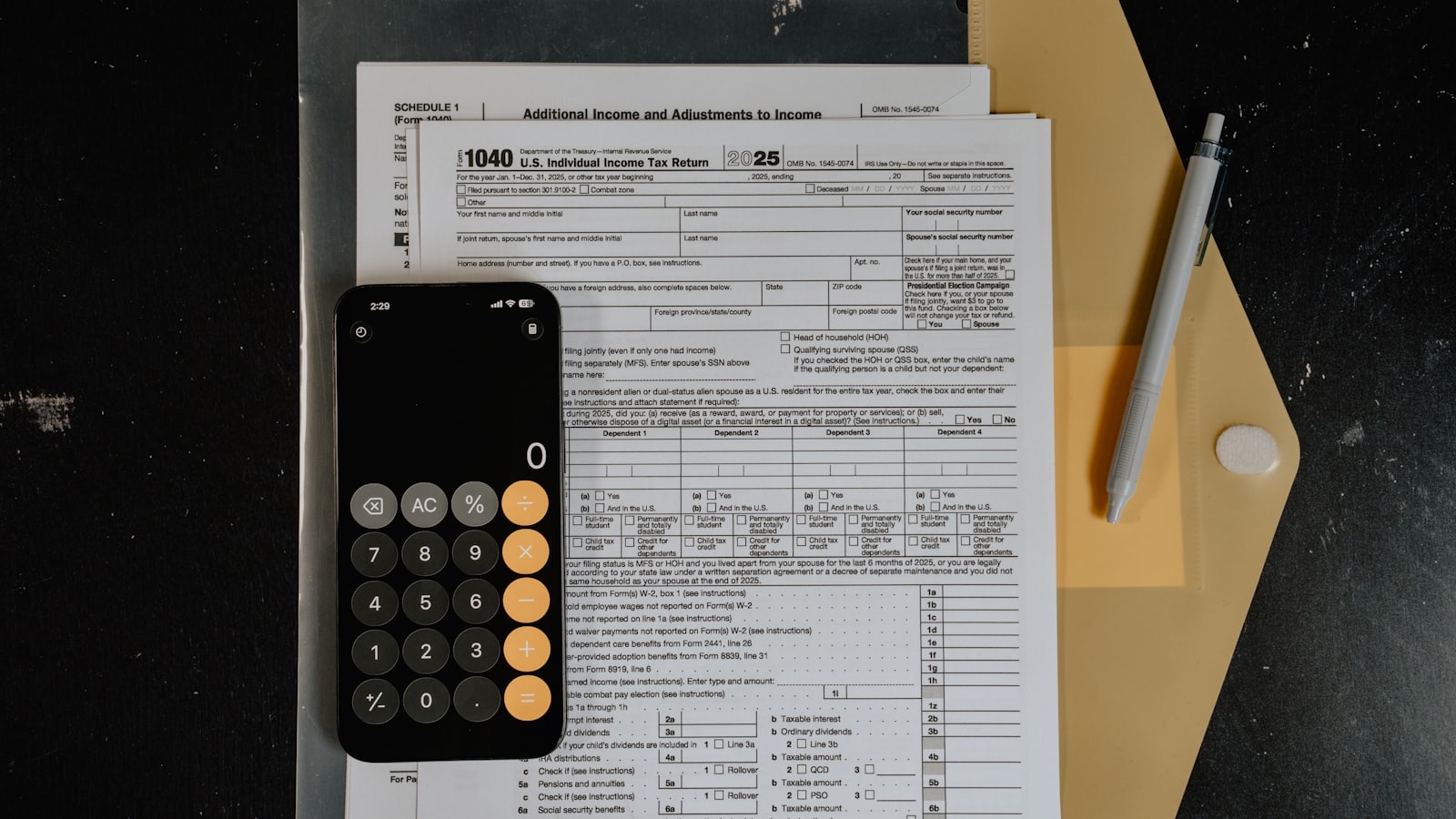







TESTREPLACED FBAR (FinCEN Form 114), required once your foreign financial accounts, combined, top $10,000 at any point in the year. Second is FATCA (Form 8938), filed with your tax return when your specified foreign financial assets cross a higher, status-dependent threshold. These are informational filings — you may owe no additional tax at all — yet the penalty for skipping the FBAR runs about $16,000 per non-willful violation, climbing for willful failures to the greater of $160,000 or half the account balance per year. A penalty like that can outstrip the account it was meant to report.
The traps are structural. The FBAR isn't part of your Form 1040 — it goes to a different agency (Treasury's Financial Crimes Enforcement Network) through a different portal, so people who file a perfect tax return still miss it. The $10,000 test is an aggregate peak, not a year-end snapshot, so a modest checking account plus a small savings account plus a pension abroad can quietly cross the line. And "foreign account" reaches further than most expect — it includes accounts you merely have signature authority over, like a foreign employer's account you can sign on. This article separates the two regimes, lays out who files what, and shows how to fix a missed year before it becomes a six-figure problem.
FBAR and FATCA are two different filings — know which you owe
It's easy to assume FBAR and FATCA are one and the same. In practice they're built on separate statutes, land with separate agencies, and trigger at separate dollar amounts. Plenty of filers owe both; others owe just one. Sorting out which starts with knowing what each form actually covers.
| Feature | FBAR (FinCEN 114) | FATCA (Form 8938) |
|---|---|---|
| Filed with | FinCEN / Treasury | IRS, attached to Form 1040 |
| Trigger | $10,000 aggregate at any time | $50,000+ at year-end (varies by status) |
| What's reported | Foreign financial accounts | Specified foreign financial assets (broader) |
| Signature-authority accounts | Yes — even with no ownership | No — ownership generally required |
| Filed how | BSA E-Filing System (separate) | Part of your tax return |
| Due date | April 15 (auto to Oct 15) | With the tax return, including extensions |
Where the two really part ways is scope. The FBAR reaches accounts — bank, brokerage, certain foreign pensions and life-insurance policies with cash value — including ones you only have signature authority over. FATCA's Form 8938 captures a broader class of assets, which can include foreign stock or securities not held in an account, interests in foreign entities, and foreign financial instruments — but generally only ones you actually own.
Who has to file an FBAR — and the accounts people forget
Any US person — citizen, resident, or a US entity — with a financial interest in or signature authority over foreign financial accounts files an FBAR once the aggregate peak crosses $10,000. The failures almost always come from underestimating what counts as an account.
- A pension or retirement account from a job held overseas
- A joint account with a non-US spouse or family member — the full value counts
- An account you merely have signing authority over, like a foreign employer's account or a parent's
- An investment or brokerage account opened through a bank abroad
- A life-insurance or annuity policy overseas that carries a cash surrender value
- An old account left open after relocating back to the US
Worth repeating, because it's where people miscalculate: the test aggregates the peak balances of every account, not any single account crossing $10,000. Three accounts that each topped out at $4,000 during the year add to $12,000 — and that triggers the FBAR for all of them. And because signature-authority accounts count, employees who can sign on a foreign company's operating account can have a personal FBAR obligation even though none of the money is theirs.
Who has to file FATCA Form 8938 — and why the thresholds differ
FATCA sets its bar well above the FBAR's $10,000 line, and that bar shifts depending on your filing status and where you actually live. That's by design — Congress calibrated a lower threshold for expatriates, since living abroad naturally means holding more in foreign assets.
| Filing situation | 8938 threshold (year-end / any-time) |
|---|---|
| Single, living in the US | $50,000 / $75,000 |
| Married filing jointly, living in the US | $100,000 / $150,000 |
| Single, living abroad | $200,000 / $300,000 |
| Married filing jointly, living abroad | $400,000 / $600,000 |
These two forms overlap in coverage but never substitute for one another. Turning in Form 8938 with your return does not satisfy your FBAR obligation, and filing the FBAR does not satisfy FATCA. If you cross both thresholds, you file both — the same account can appear on both forms in the same year. Treating them as one filing is a common and costly error.
How the filing calendar actually works
The FBAR's timing trips people up because it's partly tied to your tax return and partly independent of it. Once you understand the calendar, both filings turn into a routine annual task.
Inventory every account that counts
For each foreign account, record its peak value for the year and note whether you own it outright or just have signing authority. Convert every peak balance into US dollars using the Treasury's year-end exchange rate.
Submit the FBAR online
Submit FinCEN Form 114 through the BSA E-Filing System by April 15. The extension to October 15 is automatic — no request needed. The FBAR is not filed with the IRS.
Attach Form 8938 where it belongs
Once your specified foreign assets clear the FATCA threshold, Form 8938 gets attached directly to your Form 1040 — its deadline simply mirrors your return's, extensions included.
Retain your records for six years
Hang onto account statements and your FBAR confirmation. The record-retention window for the FBAR runs five years, and the IRS's assessment period for related failures can extend well past what applies to an ordinary tax return.
The penalties — why this is the filing you cannot skip
The reason practitioners treat the FBAR so seriously is the penalty structure. It's not tied to unpaid tax — it's tied to the failure to report itself, meaning you can owe zero additional tax and still face a penalty larger than the account ever held.
| Violation type | Approximate penalty (inflation-adjusted) |
|---|---|
| Non-willful failure | ~$16,000 per violation |
| Willful failure | Greater of ~$160,000 or 50% of the account balance, per year |
| Willful — criminal exposure | Fines up to $250,000 and up to 5 years imprisonment |
| FATCA Form 8938 failure | $10,000, rising to $50,000 for continued failure after IRS notice |
For taxpayers whose failure wasn't willful, the IRS provides a path back into compliance through its streamlined filing compliance procedures for taxpayers whose failure was non-willful. Qualifying filers submit the delinquent FBARs and amended returns and — for those who lived abroad and meet the residency test — can eliminate the FBAR and accuracy penalties entirely. The moment the IRS contacts you first, that door generally closes. Voluntary catch-up is almost always dramatically cheaper than being discovered.
Foreign banks report US account holders directly to the IRS under FATCA's intergovernmental agreements — so "they'll never know" is not a strategy. If your foreign bank has your US passport or Social Security number on file, the IRS likely already has data on the account. That reality is exactly why proactive streamlined filing beats waiting.
Turning this into a simple yearly habit
Once you're aware you hold foreign accounts, staying compliant is really just a short checklist to run each January. The effort required is small; what you risk by skipping it is not.
Treat the FBAR and FATCA as two separate obligations that often both apply. Track the aggregate peak of every foreign account — including ones you only sign on — against the $10,000 FBAR line, and your specified assets against your FATCA threshold. File FinCEN 114 through the BSA portal by April 15 and Form 8938 with your return. If you've missed years, use the streamlined procedures before the IRS reaches out. Because penalties can exceed the account balance itself, this is the international filing you never let slide.
Holding money overseas? Make sure your reporting holds up
Foreign account reporting carries real penalties for getting it wrong. Talk to our team about your FBAR and FATCA filing requirements — including how to handle prior-year gaps — before a small oversight turns into a bigger problem.
Talk to Our Tax TeamSources
- FinCEN — Report of Foreign Bank and Financial Accounts (FBAR), FinCEN Form 114; 31 U.S.C. 5314 and 31 CFR 1010.350
- IRS — Report of Foreign Bank and Financial Accounts (FBAR) overview and penalties
- IRS — Instructions for Form 8938, Statement of Specified Foreign Financial Assets (FATCA, IRC Section 6038D)
- IRS — Comparison of Form 8938 and FBAR Requirements
- IRS — Streamlined Filing Compliance Procedures
Frequently asked questions
You must file an FBAR (FinCEN Form 114) if the aggregate value of all your foreign financial accounts exceeded $10,000 at any point during the calendar year. It's the combined peak, not the year-end balance — if your accounts touched $10,001 for a single day, the obligation is triggered.
The FBAR goes to FinCEN, part of the Treasury, and applies once foreign financial accounts pass $10,000 combined. Form 8938 goes to the IRS as part of your tax return, applies to a wider range of specified foreign financial assets, and uses higher thresholds that shift based on your filing status and whether you live in the US or overseas. It's common to owe both.
The FBAR is due April 15, with an automatic extension to October 15 — you don't have to request the extension. It's filed electronically through the BSA E-Filing System, separately from your income tax return.
Non-willful violations typically run about $16,000 each, adjusted for inflation, while willful violations climb to the greater of roughly $160,000 or 50% of the account balance per year, with criminal exposure possible on top of that. Since the penalty can exceed what's actually in the account, coming forward through the IRS streamlined procedures is nearly always far cheaper than waiting to get caught.
