









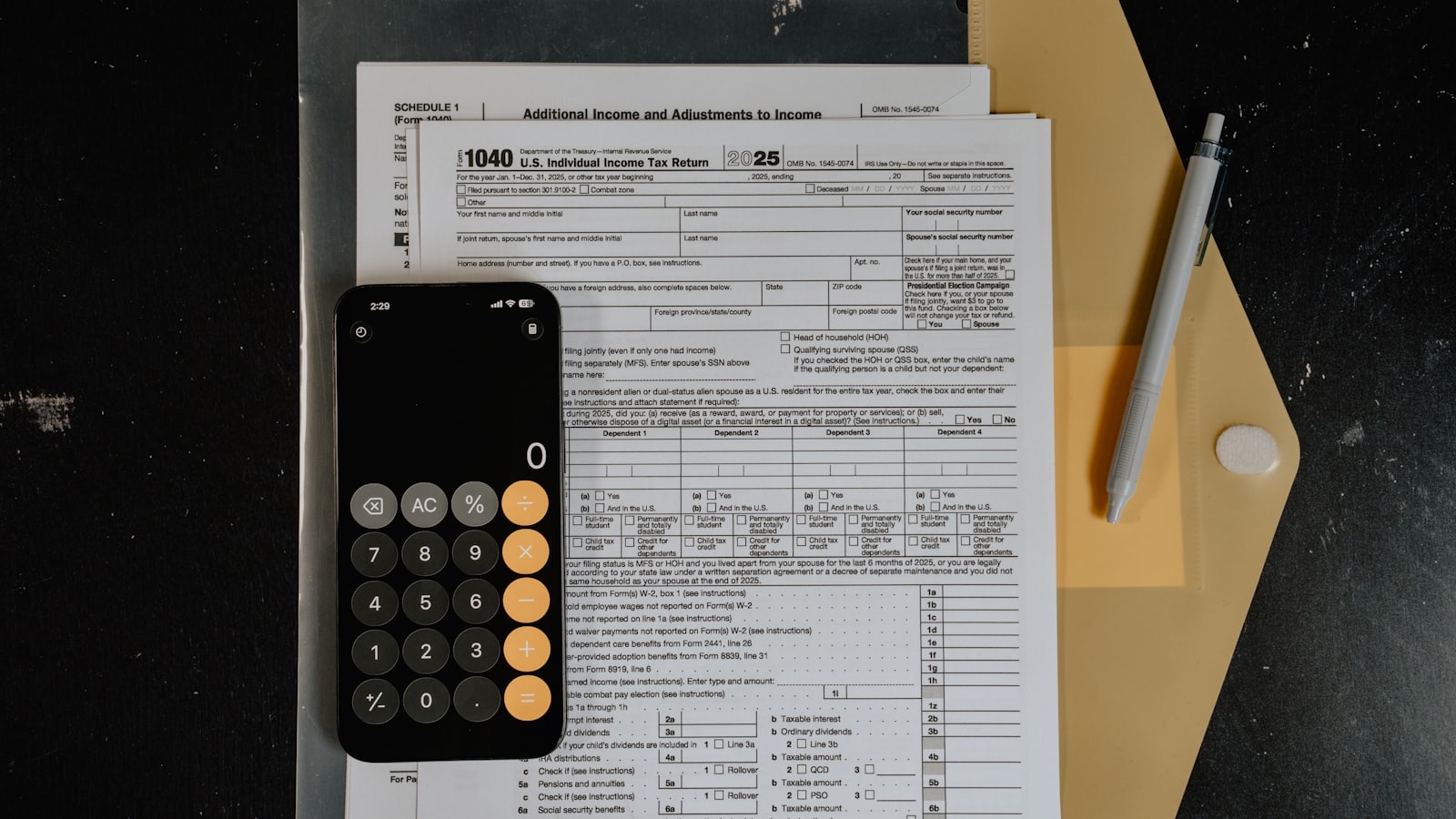







Every spring, taxpayers reach for an extension believing it delays the whole obligation — filing and paying alike. It does not. A federal tax extension — Form 4868 for individuals, Form 7004 for businesses — buys six more months to file your return, moving an individual deadline from April 15 to October 15. It buys you zero additional time to pay. Your tax is still due on the original deadline, and if you don't pay it, the failure-to-pay penalty of 0.5% per month starts accruing on the unpaid balance — extension or not.
That distinction is the whole game. The penalty an extension actually protects you from is the much steeper failure-to-file penalty, which runs 5% per month — ten times the failure-to-pay rate. So the smart move is almost always to file the extension (killing the 5% exposure) and pay your best estimate of the balance with it (killing the 0.5% exposure). Do both and you owe nothing but a small amount of interest if your estimate falls short. Do neither and the two penalties can stack, capping at 25% each. The extension is a genuinely useful tool — it just does one job, and people keep asking it to do two.
The core rule: extension to file is not an extension to pay
If you remember one thing, remember this: the extension moves your paperwork deadline, not your payment deadline. The IRS is explicit that your tax liability is due on the original date regardless of any extension to file.
The failure-to-file penalty is 5% of the unpaid tax per month (or part of a month), up to 25%. The failure-to-pay penalty is 0.5% per month, also capped at 25%. When both apply in the same month, the failure-to-file penalty is reduced by the failure-to-pay amount — but the takeaway stands: not filing costs ten times more per month than not paying. A timely extension eliminates the expensive one outright. That's why filing Form 4868 or 7004 is worthwhile even if you can't pay the full balance — you shut down the 5% penalty and are left facing only the 0.5% penalty on whatever you couldn't cover.
Form 4868 — the individual extension
Form 4868 gives individuals an automatic six-month extension to file Form 1040, pushing the deadline from April 15 to October 15. No explanation required; approval is automatic if you file on time.
Estimate your total tax liability
Use your income, withholding, and any credits to project what you'll owe for the year. It doesn't have to be exact — it has to be a reasonable, good-faith estimate.
Subtract what you've already paid
Withholding and any estimated payments reduce the balance. The difference is what you should pay with the extension.
File Form 4868 by the original deadline
File electronically through tax software, the IRS Free File portal, or a preparer — or on paper. Filing is what secures the extension.
Pay your estimated balance
Pay online via IRS Direct Pay or with the form. Note: if you make an electronic payment and designate it as an extension payment, the IRS treats that alone as your Form 4868 — no separate form needed.
You can skip filing Form 4868 as a separate document entirely. If you make an electronic payment through IRS Direct Pay, EFTPS, or a card payment and mark it as an "extension" payment, the IRS automatically processes it as your extension request. Paying and extending become a single action — which is exactly the behavior the rules are trying to encourage.
Form 7004 — the business extension
Form 7004 is the business counterpart, covering most entity returns. The mechanics mirror Form 4868, but the returns and lengths vary by entity type, so match the form to your structure.
| Entity / return | Original deadline (calendar year) | Extended deadline via 7004 |
|---|---|---|
| Partnership — Form 1065 | March 15 | September 15 |
| S-corporation — Form 1120-S | March 15 | September 15 |
| C-corporation — Form 1120 | April 15 | October 15 |
| Trusts & estates — Form 1041 | April 15 | September 30 |
The pass-through deadlines matter more than they look. Partnerships and S-corporations must file by March 15, a month ahead of the individual deadline, because their owners need the resulting K-1s to complete their own returns. Missing a partnership or S-corp deadline triggers a per-partner, per-shareholder, per-month penalty that adds up fast — another reason to file Form 7004 on time even when the return itself isn't ready.
What to do when you can't pay in full
An extension plus a partial payment is a strong position. But if you genuinely can't cover the balance, silence is still the worst option — the IRS offers structured ways to pay over time.
- File the extension anyway — it removes the 5% failure-to-file penalty regardless of payment
- Pay as much as you can with the extension to shrink the 0.5% penalty and interest base
- Set up an IRS online payment plan (installment agreement) for the remaining balance
- Know that an active installment agreement can cut the failure-to-pay penalty rate while it's in effect
- Consider an offer in compromise only for genuine, documented inability to pay the full amount
Interest also accrues on any unpaid balance from the original due date until it's paid, and interest is not waived by an extension or a payment plan. That's why paying down as much as possible early — even a partial payment — always beats waiting.
The Florida angle
For Florida-based individuals and businesses, the extension conversation is federal-only. Florida imposes no personal state income tax, so individuals have no state return or state extension to coordinate. Florida does levy a corporate income tax, so C-corporations and certain entities still manage a state filing — but the sole proprietors, partnerships, and S-corporation owners who make up most small businesses face just the federal extension mechanics described here.
An extension is a filing tool, not a payment reprieve. File Form 4868 (individuals) or Form 7004 (businesses) by the original deadline to erase the 5%-per-month failure-to-file penalty — and pay your best estimate of the balance with it to minimize the 0.5%-per-month failure-to-pay penalty and interest. Match Form 7004 to your entity, and mind the March 15 pass-through deadline. If you can't pay in full, file and pay what you can, then set up an installment agreement rather than going silent. Done right, an extension costs you almost nothing; done as a payment delay, it costs you 25%.
Need more time to file — but not more penalties?
MK Tax & Accounting files your Form 4868 or 7004, estimates your balance so you avoid the failure-to-pay trap, and sets up a payment plan if you need one. Extensions handled correctly, every time.
Talk to a tax proSources
- IRS — About Form 4868, Application for Automatic Extension of Time To File U.S. Individual Income Tax Return
- IRS — About Form 7004, Application for Automatic Extension of Time To File Certain Business Income Tax Returns
- IRS — Failure to File Penalty (IRC Section 6651(a)(1))
- IRS — Failure to Pay Penalty (IRC Section 6651(a)(2))
- IRS — Get an Extension to File Your Tax Return / IRS Direct Pay
- IRS — Payment Plans, Installment Agreements
Frequently asked questions
No — this is the single most misunderstood point. An extension (Form 4868 for individuals, Form 7004 for businesses) extends only the time to FILE your return, not the time to PAY. Your tax is still due on the original deadline. To avoid the failure-to-pay penalty, you must estimate what you owe and pay it with the extension request.
The failure-to-pay penalty is 0.5% of the unpaid tax per month, up to 25%. The far larger failure-to-file penalty is 5% per month, also up to 25% — which is exactly what a properly filed extension prevents. If you don't file the extension AND don't pay, both can apply. Filing the extension and paying what you can is always cheaper than doing nothing.
Form 4868 is the automatic extension for individual income tax returns (Form 1040), giving you until October 15. Form 7004 is the automatic extension for most business returns — partnerships, corporations, S-corporations, and many trusts and estates. The extension length and the return it covers differ by entity, but the core rule is identical: it extends filing, not payment.
No. Both Form 4868 and Form 7004 grant an automatic extension — you don't have to explain why, and approval is essentially guaranteed as long as the form is filed on time and, ideally, accompanied by a payment of your estimated balance. The IRS doesn't judge the reason; it just needs the request by the original due date.
