









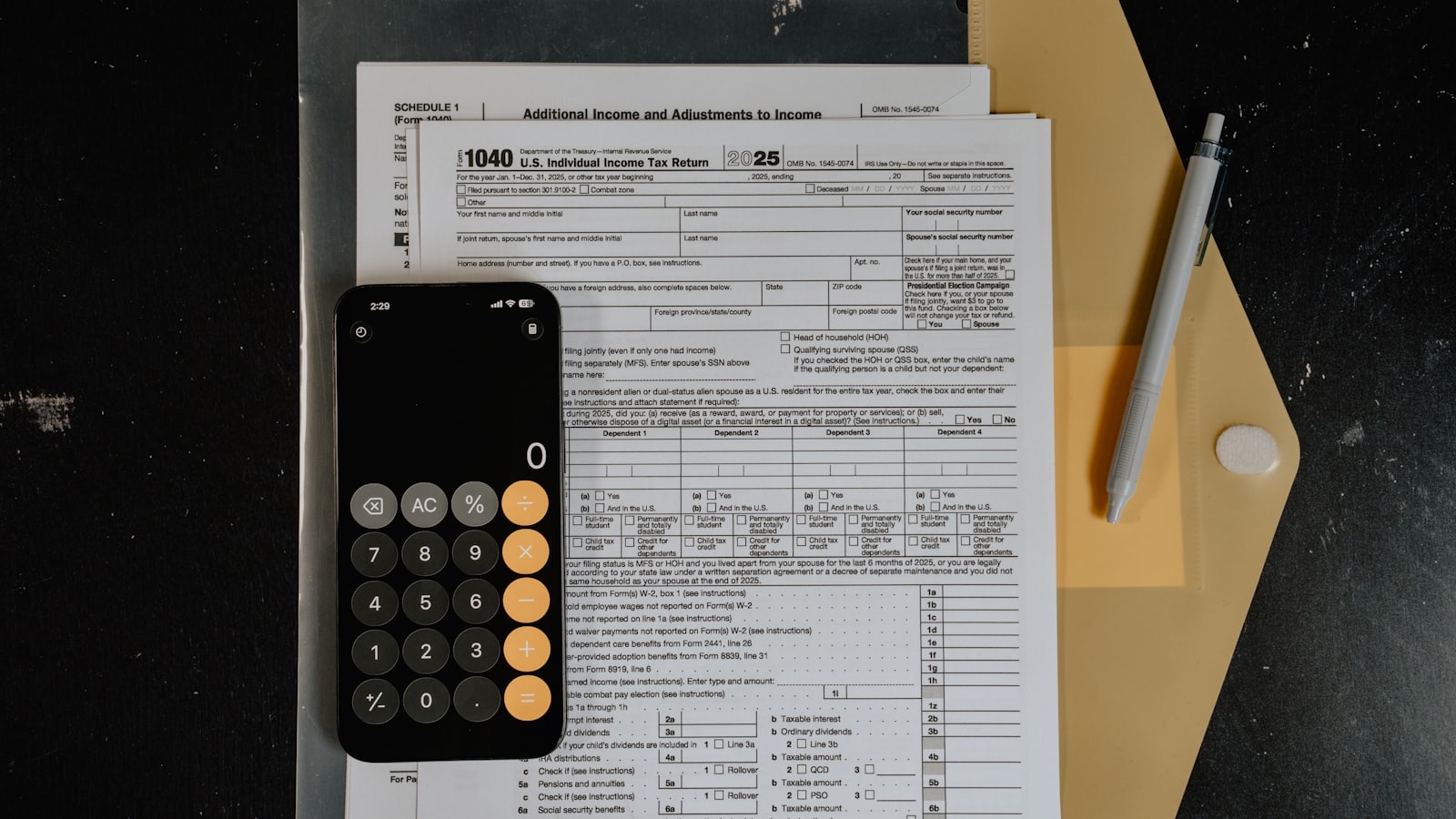







Every growing business eventually takes a position that isn't black and white. Is this consultant a contractor or an employee? Can this cost be expensed now or must it be capitalized? Does this income belong in this year or next? These are uncertain tax positions — and taking them isn't the problem. Taking them without a paper trail is. The IRS doesn't penalize you for being uncertain; it penalizes underpayments tied to positions you can't defend. The entire discipline of managing uncertain positions comes down to making each one defensible before you file, not scrambling to justify it after a notice arrives.
The defense has a name and a statutory home. Under IRC Section 6664, the 20% accuracy-related penalty does not apply to any part of an underpayment for which you had reasonable cause and acted in good faith — and reasonable, documented reliance on a competent tax professional is one of the most common ways to establish it. That's the machinery this article is about: how to spot where uncertainty lives in your return, how to build the contemporaneous file that supports a reasonable-cause defense, when to set aside a reserve for the exposure, and when a formal written opinion earns its cost. Handled this way, an aggressive position becomes a calculated, documented decision — not a liability.
Spot where uncertainty actually lives
Uncertain positions cluster in the same places for most small businesses. Naming them is the first step — you can't document exposure you haven't identified. The recurring culprits are classification questions, timing questions, and characterization questions, plus anything unusual enough that reasonable professionals could disagree on the treatment.
- Worker classification — treating a borderline worker as a 1099 contractor
- Capitalize vs. expense — deducting a cost the IRS might require you to capitalize
- Reasonable compensation — the salary an S-corp owner pays themselves
- Income timing — deferring or accelerating recognition across tax years
- Business vs. personal — mixed-use expenses like vehicles, travel, and home office
- Hobby vs. business — activities with recurring losses and thin profit motive
- Related-party pricing — rent, interest, or fees between entities you control
For each position you flag, ask the honest question: if an IRS examiner looked at only this item, would they clearly agree with me? If the answer is "clearly yes," it isn't uncertain — move on. If the answer is "probably, but a reasonable examiner could push back," you've found a position that needs a file behind it.
Build the contemporaneous file — the core defense
The single most important word in uncertain-position management is contemporaneous. A memo written at the time you file, explaining the position and the authorities behind it, is powerful evidence of good faith. The same memo reconstructed after the IRS raises the issue is far weaker — and sometimes worthless. Your file doesn't need to be long. It needs to exist, and it needs to show real analysis.
Describe the position and the facts
State exactly what you're claiming and the relevant facts as they stood when you filed. Facts drive the answer, so get them precise.
Gather the supporting authority
Collect the Code sections, regulations, rulings, or cases that support your treatment. A position with no authority behind it isn't defensible — it's a guess.
Grade the confidence level
Determine whether the position reaches reasonable basis, substantial authority, or higher. That grade decides whether you must disclose it on Form 8275.
Document the reliance
If you relied on a tax professional, note that you gave them complete and accurate information and that their advice informed the position. That reliance anchors the Section 6664 defense.
Date it and file it
Sign and date the analysis, attach it to your tax file, and retain it for at least the statute-of-limitations window. An undated file is hard to prove was contemporaneous.
The reasonable-cause, good-faith defense under Section 6664 is built from a contemporaneous file, not from good intentions remembered later. Identify the position, cite the authority, grade the confidence, document your reliance on a competent adviser, and date the whole thing. That file is what stands between "we owe the tax" and "we owe the tax plus a 20% penalty."
Decide whether the position needs a reserve
Larger businesses formally book reserves for uncertain positions under accounting rules; most small businesses don't need that machinery. But the underlying instinct is sound: if a position could be disallowed and you'd owe meaningful tax and interest as a result, it's prudent to set aside cash — mentally or in a dedicated account — rather than spend a benefit you might have to give back. A reserve doesn't change your tax return. It changes whether a lost position is an inconvenience or a cash-flow shock.
| Position profile | Reserve posture | Why |
|---|---|---|
| Small dollars, strong authority | No reserve needed | Low exposure, high confidence — routine position |
| Large dollars, strong authority | Light reserve | Confidence is high but the downside is big if wrong |
| Small dollars, weak authority | Disclose, small reserve | Penalty risk matters more than the tax at stake |
| Large dollars, weak authority | Reserve and consider an opinion | Both tax and penalty exposure are material |
Florida's lack of a personal state income tax means an owner taking pass-through income doesn't face a separate state layer of tax on a disallowed federal position — one fewer moving part than in a state-tax jurisdiction. But federal tax, penalty, and interest still apply in full. If you're setting aside a reserve for an uncertain position, size it to the federal exposure and don't let the absence of Florida income tax lull you into under-reserving.
Know when to buy a written opinion
A formal written opinion from a qualified tax adviser costs real money, so it should be reserved for positions where the math justifies it: large dollars, genuine legal uncertainty, or a transaction type the IRS is known to examine. A well-reasoned opinion does two things — it pressure-tests whether your position actually holds up, and it strengthens the reasonable-cause, good-faith defense if the position is later challenged.
An in-house documented analysis is enough when
- The dollars at stake are modest
- The authority clearly supports reasonable basis or better
- The position is a common, well-settled type
- You can articulate and document the reasoning yourself
A written professional opinion is worth it when
- The dollars are large enough to justify the cost
- The law is genuinely unsettled or conflicting
- The transaction is one the IRS scrutinizes closely
- You need the strongest possible penalty defense
An opinion is only as good as the facts it's built on. Give your adviser complete and accurate information — omitting an inconvenient fact to get a more favorable opinion undermines the very reliance defense you're paying for. Reasonable-cause reliance requires that you disclosed the full picture and didn't ignore advice you knew or should have known was questionable.
Run it as a standing process, not a one-time act
Uncertain positions recur as the business grows and the tax law shifts. The businesses that stay defensible treat this as a light annual loop rather than a scramble triggered by an audit letter.
- Re-scan the return for positions that are genuinely uncertain, not just aggressive-sounding
- Refresh the authority behind each recurring position — the law and rulings change
- Confirm each position still reaches reasonable basis, and disclose on Form 8275 where it doesn't reach substantial authority
- Update or size any reserve to the current dollar exposure
- Archive the contemporaneous file against the applicable statute-of-limitations window
Uncertain tax positions are a normal part of running a growing business — the risk is never taking them, it's taking them undocumented. Spot where uncertainty lives, build a contemporaneous file that cites authority and documents your reliance, reserve cash where the exposure is material, and buy a written opinion when the dollars and the uncertainty justify it. Do that, and the Section 6664 reasonable-cause defense is available to you when it matters most — turning an aggressive position into a defensible one.
Take the position — and be ready to defend it
Talk to our team about your situation — if a position on your return is uncertain, we can help you think through the documentation that supports it and give you an honest read on your options.
Talk to a tax proSources
- IRS — Internal Revenue Code Section 6664 (Reasonable cause and good-faith exception; definitions)
- IRS — Internal Revenue Code Section 6662 (Accuracy-related penalty on underpayments)
- IRS — Internal Revenue Code Section 6501 (Limitations on assessment and collection)
- IRS — Treasury Regulation Section 1.6664-4 (Reasonable cause and good-faith exception)
- IRS — About Form 8275, Disclosure Statement
- IRS — Independent Contractor (Self-Employed) or Employee? and Form SS-8
Frequently asked questions
An uncertain tax position is any position on a return where it isn't clear the IRS would agree with your treatment if it examined the return — for example, whether an expense is deductible, how to classify a worker, or whether income can be deferred. It's not inherently wrong; it just carries a real chance of challenge, which means it needs documentation and, in some cases, a reserve.
Build a contemporaneous file at the time you file: identify the position, gather the supporting authorities, write down the reasoning, and confirm it meets at least reasonable basis (and disclose it if it doesn't reach substantial authority). Reliance on that documented analysis — and on a competent adviser — is the foundation of a reasonable-cause defense against penalties.
A written opinion from a qualified tax adviser is worth the cost when a position involves large dollars, genuine legal uncertainty, or a transaction the IRS is known to scrutinize. A well-reasoned opinion supports a reasonable-cause, good-faith defense under IRC Section 6664 and can be the difference between owing tax and owing tax plus a 20% penalty.
Under IRC Section 6664(c), the accuracy-related penalty doesn't apply to any portion of an underpayment for which you had reasonable cause and acted in good faith. Reasonable, documented reliance on a competent tax professional — given full and accurate information — is a common way to establish it. The key is contemporaneous documentation showing you took real care.
