









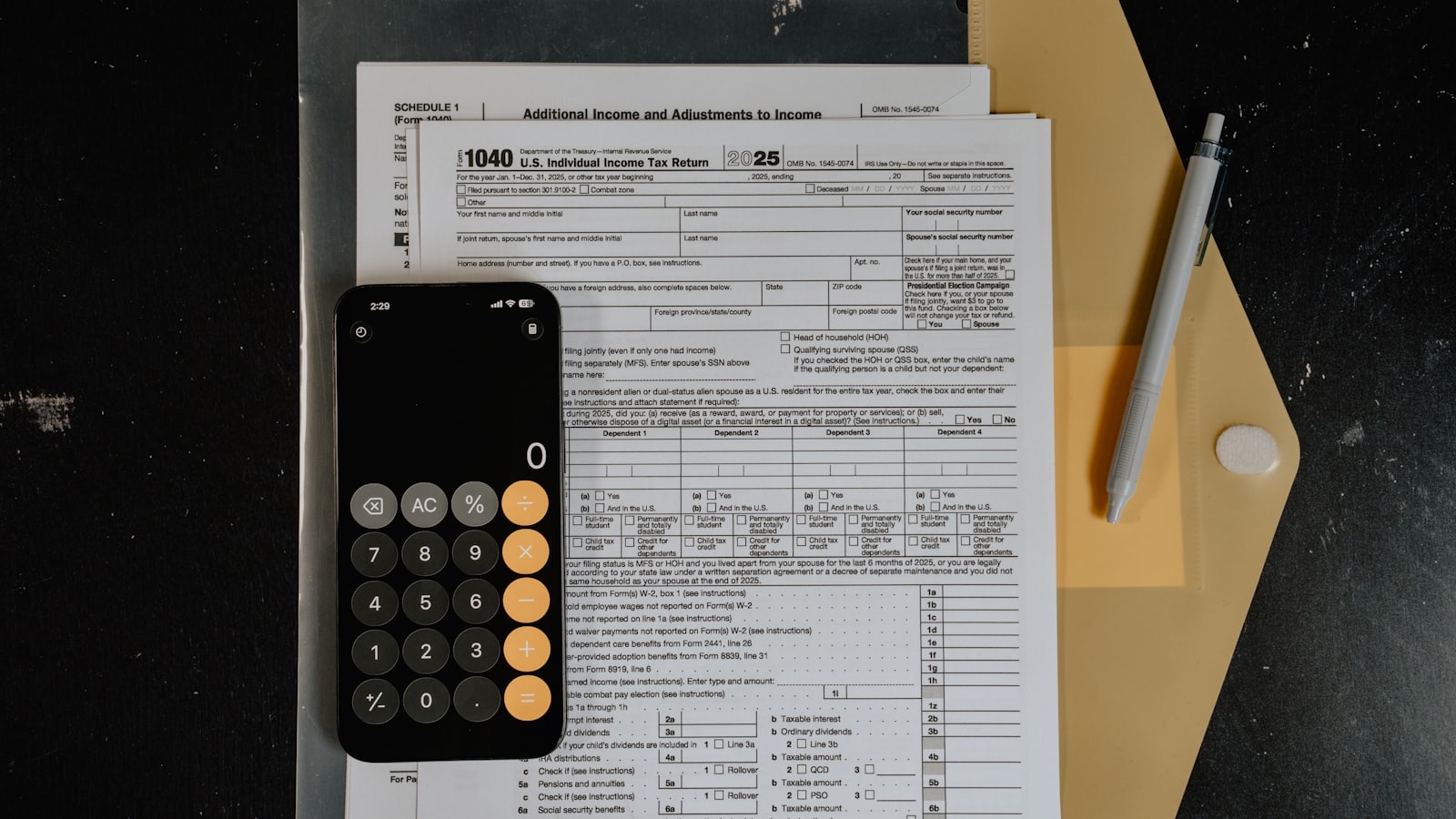






A foreign person who forms a single-member US LLC often does so precisely because it is simple: a US bank account, a US-facing entity, no US partners, and — in many cases — no US income tax owed, because the LLC's income isn't effectively connected to a US trade or business. What surprises owners is that "no tax" does not mean "no filing." Since 2017, the IRS treats a foreign-owned single-member LLC as a domestic corporation for reporting purposes, which triggers a mandatory annual filing: Form 5472 attached to a pro-forma Form 1120. The penalty for missing it is $25,000 per form, per year — and it applies even when the LLC earned nothing, distributed nothing, and owes no tax at all.
The trap is the disconnect between the tax result and the filing rule. Owners reason, correctly, that the LLC has no US taxable income, and conclude, incorrectly, that there is nothing to file. But the Form 5472 obligation is triggered by reportable transactions — and the money used to form and fund the LLC is itself a reportable transaction. So a brand-new, dormant, zero-revenue LLC usually has a filing obligation in its very first year. This article explains who is caught, what the two forms are, what counts as a reportable transaction, and how to avoid the five-figure penalty for a form many owners never knew existed.
Who this actually applies to
The rule reaches a specific but very common structure: a US LLC with a single owner, where that owner is a foreign person or a foreign entity, and the LLC has not elected to be taxed as a corporation. Because a single-member LLC is "disregarded" by default, it has no income tax return of its own — which is exactly why the reporting rule had to be bolted on separately.
| Entity | Foreign owner? | Form 5472 obligation? |
|---|---|---|
| Single-member LLC (disregarded) | Yes, 25%+ foreign owned | Yes — the core case this rule targets |
| Single-member LLC (disregarded) | No, US owner | No |
| Multi-member LLC (partnership) | Foreign partner | Files Form 1065; different regime, not this one |
| LLC electing C-corp taxation | Yes | Yes — via the corporation's own Form 1120 |
| US C-corporation, 25%+ foreign owned | Yes | Yes — Form 5472 with its regular 1120 |
The headline case is the disregarded single-member LLC with a foreign owner. If that describes your entity, assume you have a filing obligation and work to disprove it — not the other way around.
The two forms, and why there are two
The confusing part is that a disregarded entity has no income tax return, yet the reporting rule requires one. The IRS solved this by requiring a pro-forma Form 1120 — a corporate return used purely as a cover sheet — with Form 5472 attached to it.
Pro-forma Form 1120 (the cover)
You complete only the identifying information at the top: the LLC's name, US mailing address, and EIN. The income, deduction, and tax lines are left blank. Write 'Foreign-owned U.S. DE' across the top per the instructions. This form is not calculating tax — it exists to carry the 5472.
Form 5472 (the substance)
This is the information return that actually discloses the relationship: who the foreign owner is, what country they are in, and every reportable transaction between the LLC and the owner or related parties during the year, including capital contributions and loans.
File by fax or mail, not e-file
This package goes to the dedicated IRS unit by fax or mail — it is not filed like an ordinary e-filed corporate return. The due date tracks the corporate deadline: generally the 15th day of the fourth month after year-end, with an extension available on Form 7004.
What counts as a reportable transaction — including formation
The obligation is triggered by a reportable transaction, and the definition is broad. It is essentially any exchange of value between the LLC and its foreign owner or a related party. Owners routinely underestimate this and assume that because they had "no business activity," they had nothing to report.
- The capital you contributed to form and fund the LLC — this alone usually creates a first-year obligation
- Loans from you to the LLC, and the LLC's repayments back to you
- Distributions of cash or property from the LLC to you
- Amounts the LLC paid you or a related party for services, rent, or royalties
- Sales or purchases of property between the LLC and a related party
- Any other amount paid or received that moves value between the LLC and its foreign owner
The single biggest misconception is that a new, revenue-free LLC has nothing to report. But the money you wired in to open the bank account and capitalize the entity is itself a reportable transaction. So the typical brand-new foreign-owned LLC — no customers, no revenue, no distributions — still triggers the Form 5472 obligation in its first year through formation and funding alone. Treat year one as a filing year by default.
No income tax owed — the filing is still mandatory
It is worth stating plainly because it is the crux of the trap. Form 5472 is an information return, not a tax return. Its penalty is assessed for the failure to inform, entirely independent of whether any tax was due. An LLC can have zero US-source income, zero effectively connected income, owe zero US tax — and still be hit with the $25,000 penalty purely for not filing the form.
What owners assume
- No US taxable income means nothing to file
- A dormant LLC has no filing obligation
- The penalty only bites if tax was actually owed
- Foreign ownership without US operations is invisible to the IRS
What the rules actually say
- The 5472 is an information return, filed regardless of tax owed
- Formation funding alone triggers year-one filing
- The $25,000 penalty applies even at zero profit and zero tax
- The disregarded LLC is a domestic corporation for this reporting
The penalty structure, and how it grows
The penalty is not a one-time slap. It is $25,000 per Form 5472, per year, for failing to file a substantially complete form on time — and an incomplete or inaccurate form is treated as a failure to file. If the failure continues after the IRS mails a notice, the penalty grows.
| Situation | Penalty |
|---|---|
| Late, missing, or substantially incomplete Form 5472 | $25,000 per form, per year |
| Failure continues after IRS notice | Additional $25,000 for each 30-day period |
| Multiple related entities each missing a form | $25,000 stacks per entity, per year |
| Income tax actually owed on the LLC | Not required for the penalty to apply |
Because the penalty is triggered by an incomplete form as much as a missing one, accuracy matters as much as timeliness. The most common defect is under-reporting reportable transactions — forgetting the formation capital, an owner loan, or a distribution. Reconcile every movement of money between you and the LLC for the year before you sign, and keep the documentation, because the penalty regime also carries recordkeeping requirements. If a prior year was missed entirely, there are reasonable-cause and disclosure paths to correct it — act before the IRS contacts you, not after.
Staying compliant without overpaying attention
The obligation is annual and mechanical, which is good news: once the process is set up, it runs. The failure mode is almost always ignorance that the form exists, followed by years of silent non-filing that compound the penalty.
- Obtain an EIN for the LLC using Form SS-4 — a foreign owner can get one without a US Social Security number
- Track every reportable transaction with the owner and related parties throughout the year
- File the pro-forma Form 1120 with Form 5472 attached by the corporate deadline, using Form 7004 to extend if needed
- Send the package to the dedicated IRS fax or mailing address — do not assume it e-files with a normal return
- Keep records supporting each reported transaction, per the Section 6038A recordkeeping rules
- If you missed a prior year, pursue correction and reasonable-cause relief before the IRS reaches out
A foreign-owned single-member US LLC is simple to own but carries a hard, easy-to-miss filing: Form 5472 attached to a pro-forma Form 1120, due every year the LLC has a reportable transaction — and the capital used to form it counts. The obligation exists whether or not any US income tax is owed, and the penalty starts at $25,000 per form, per year, growing after IRS notice. The playbook is unglamorous and effective: get an EIN, log every money movement with the owner, file the two-form package by fax or mail on the corporate deadline, and treat year one as a filing year by default. The form is boring; the penalty for ignoring it is not.
Don't let a $25,000 form catch you by surprise
The EIN, the reportable-transaction tracking, and the Form 5472 and pro-forma 1120 filings all have to be right and on time — and if you've missed a prior year, it's worth cleaning that up before the IRS finds it. Talk to our team about getting current.
Talk to a tax proSources
- IRS — Instructions for Form 5472, Information Return of a 25% Foreign-Owned U.S. Corporation or a Foreign Corporation Engaged in a U.S. Trade or Business
- IRC Section 6038A — Information with respect to certain foreign-owned corporations, including the $25,000 penalty (Section 6038A(d))
- Treasury Decision 9796 — Final regulations treating foreign-owned disregarded entities as corporations for Section 6038A reporting
- IRS — About Form 1120, U.S. Corporation Income Tax Return
- IRS — About Form SS-4, Application for Employer Identification Number (EIN)
Frequently asked questions
Yes. Since 2017, a foreign-owned single-member LLC is treated as a domestic corporation solely for reporting purposes and must file Form 5472 attached to a pro-forma Form 1120 every year it has a reportable transaction — including the money used to form and fund it. There is no minimum-income or profit threshold; a zero-profit or dormant LLC can still owe the filing.
The penalty is $25,000 per Form 5472 per year for failure to file a substantially complete form on time. It applies even if the LLC owes no income tax and even if it had no profit. If the failure continues after the IRS sends notice, an additional $25,000 accrues for each 30-day period the failure persists.
Almost any exchange of value between the LLC and its foreign owner or a related party — capital contributions, loans, repayments, distributions, and amounts paid for services, rent, royalties, or the sale of property. Crucially, the funds used to form and capitalize the LLC are themselves reportable, so even a brand-new LLC that has done nothing else usually has a Form 5472 obligation in its first year.
The LLC itself needs an EIN, which a foreign owner can obtain from the IRS by fax or mail using Form SS-4 without needing a US Social Security number. The pro-forma Form 1120 is filled out only with the LLC's name, address, and EIN at the top — the income and deduction lines are left blank — and Form 5472 is attached to it. The package is filed by fax or mail to the dedicated IRS unit, not e-filed with a normal corporate return.
